
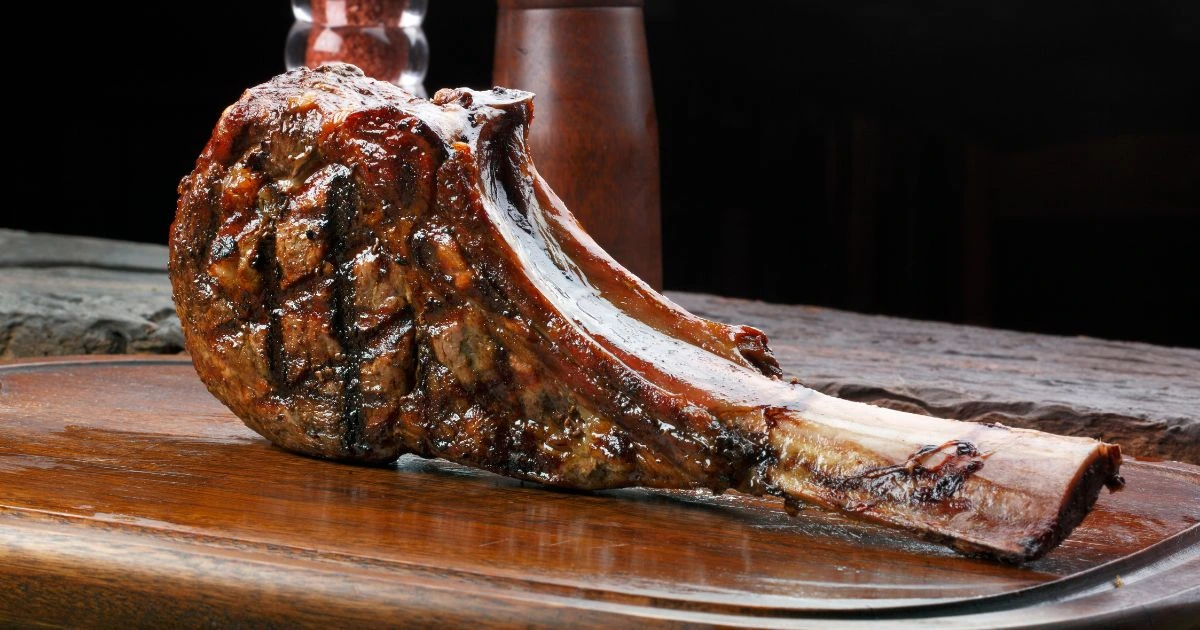
The first time I saw a tomahawk steak, it was like witnessing culinary art on a plate. Its massive bone-in profile stood tall, demanding attention with its dramatic presentation. This transforms an ordinary dinner into an extraordinary experience.
This isn’t just another cut of beef, it’s a statement piece that captures the imagination of serious meat lovers. A tomahawk steak represents the pinnacle of beef excellence. Cut from the ribeye section with an impressive long bone left intact, this stunning cut typically weighs between 1 1/2 and 3 pounds.
Chefs and home cooks alike have fallen in love with this recipe centerpiece. It promises rich flavor and incredible tenderness.
What makes the it truly special is its visual impact and exceptional taste. The extended bone serves as a natural handle, creating a stunning presentation. This elevates any dining experience.
Meat enthusiasts appreciate this premium cut for its marbling, depth of flavor, and the skillful butchery required. Whether you’re a seasoned grilling expert or a home cook looking to impress, mastering the tomahawk steak will transform your culinary repertoire. Prepare to embark on a delicious journey that celebrates one of the most spectacular steak cuts in the meat world.
Table of Contents
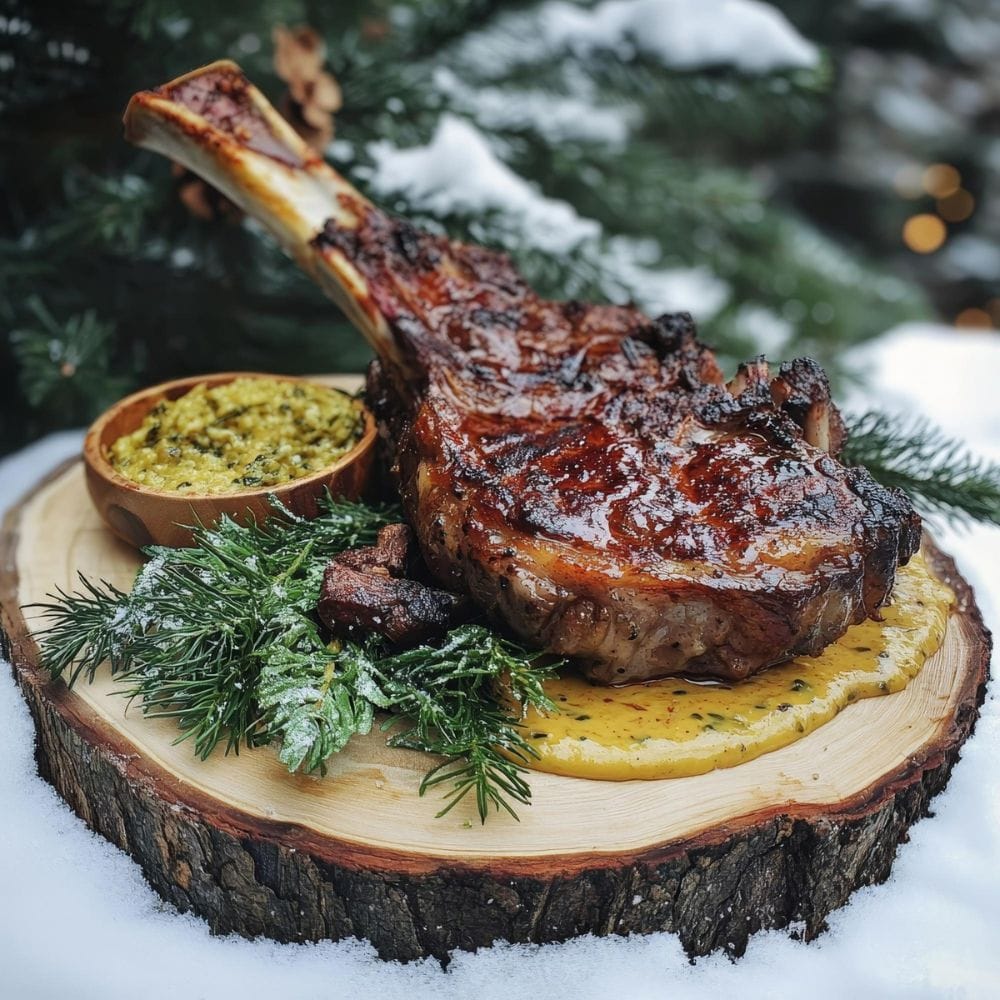
Tomahawk Steak
Ingredients
Equipment
Method
- Bring steak to room temperature for 30–45 minutes.
- Pat dry with paper towels. Trim excess fat if necessary.
- Mix salt, pepper, garlic powder, thyme, rosemary, paprika, and red pepper flakes.
- Rub generously over the steak. Rest at room temperature.
- Grilling: Preheat grill to 450–500°F. Sear 3–4 minutes per side, then move to indirect heat until desired doneness.
- Oven-Roasting: Preheat oven to 275°F. Place steak on a rack and cook until internal temp reaches 125°F, then sear in hot skillet.
- Reverse Sear: Cook steak in 275°F oven for 45–60 minutes until 120–125°F, then sear at 500°F for 2–3 minutes per side.
- Remove steak from heat.
- Tent loosely with foil, and rest for 10–15 minutes.
- Roast garlic until golden.
- Melt butter in skillet, squeeze roasted garlic into it, and add thyme.
- Season with salt and pepper.
- Slice steak against the grain or serve whole.
- Drizzle with garlic butter sauce.
- Pair with roasted potatoes, asparagus, or Brussels sprouts.
Notes
- For best results, choose USDA Prime or Choice grade Tomahawk steaks with heavy marbling.
- Carryover cooking raises internal temp by 5–10°F, so pull steak early.
- Letting the steak rest is essential to keep juices inside.
- Side dish pairings: mashed potatoes, grilled asparagus, truffle mac & cheese, or Brussels sprouts.
Understanding What Makes a Tomahawk Steak Special
The tomahawk ribeye steak is a true showstopper in the world of premium beef. It offers exceptional flavor and a dramatic presentation. It also has a rich culinary tradition that excites steak lovers everywhere.
The Origin of the Tomahawk Cut
Cooking a tomahawk steak starts with its unique heritage. Butchers pick the best ribeye steaks. They leave an extended rib bone to create the steak’s signature look.
This cut comes from traditional butchering methods. It shows off the full potential of high-quality beef.
- Derived from the prime ribeye section
- Carefully trimmed to highlight natural meat qualities
- Preserved with full rib bone attached
Distinctive Features of the Tomahawk
The tomahawk ribeye steak has remarkable features. The extended bone adds a stunning visual presentation. It also helps distribute heat during cooking, enhancing the meat’s flavors.
- Typically weighs between 30-45 ounces
- Includes significant marbling for rich flavor
- Generous cut that serves multiple people
Why It’s Called a Tomahawk
The name comes from the steak’s resemblance to a Native American tomahawk axe. The long bone looks like a handle, making it a conversation piece at any table.
A culinary masterpiece that combines visual drama with exceptional taste!
Cooking it requires skill and appreciation for its unique qualities. Whether you’re a professional chef or a home cook, this cut promises an unforgettable dining experience. It celebrates the art of premium beef preparation.
The Anatomy of a Perfect Tomahawk Steak
It is the top of beef quality, with a cut that amazes steak fans. It’s known for its long bone and great marbling. This makes it a highlight of any meal.
Here’s why it is loved by meat lovers:
- Cut from the ribeye muscle of the cow
- Includes an extended bone that resembles a tomahawk axe
- Typically weighs between 30-45 ounces
- Contains significant intramuscular fat for exceptional flavor
The tomahawk steak’s special features come from its unique makeup. Butchers pick this cut for its tenderness and flavor. The long bone adds to the meat’s taste and looks great on the plate.
| Characteristic | Description |
| Muscle Group | Ribeye (Longissimus dorsi) |
| Marbling Quality | High-grade, abundant intramuscular fat |
| Typical Weight | 30-45 ounces |
| Price Range | Premium cut, higher cost due to limited availability |
Meat experts love the tomahawk steak for its top-notch quality. Its rarity and high demand make it pricey. It’s a luxury for those who want the finest beef.
Essential Tools and Equipment for Cooking Tomahawk Steak
Cooking a perfect tomahawk steak needs more than just skill. The right tools make a big difference. They help you get restaurant-quality results every time.
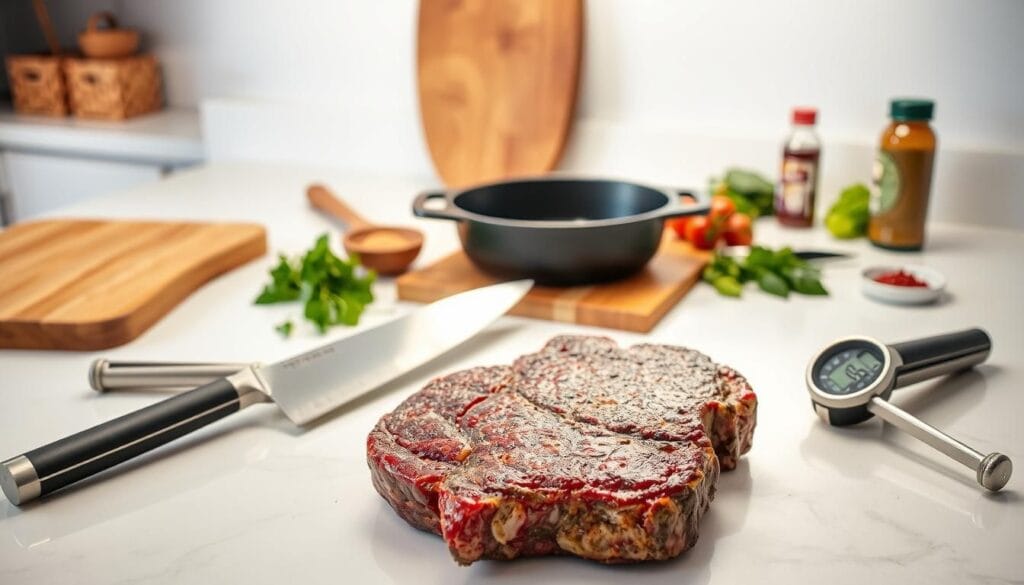
Getting ready for a great tomahawk steak means having the right tools. These tools are key to mastering this impressive cut of meat. Having the right equipment is the first step in cooking a perfect steak.
Must-Have Kitchen Tools
- Cast-iron skillet for perfect searing
- Heavy-duty tongs for safe meat handling
- Sharp chef’s knife for precise trimming
- Cutting board with juice groove
- Meat mallet for even thickness
Temperature Control Devices
When cooking a steak, precise temperature control is key. Invest in high-quality tools to ensure perfect doneness.
| Device | Accuracy | Price Range |
| Digital Meat Thermometer | ±1°F | $20-$50 |
| Infrared Thermometer | ±2°F | $40-$100 |
| Wireless Bluetooth Thermometer | ±3°F | $50-$150 |
Recommended Cooking Surfaces
Different cooking surfaces offer unique benefits for cooking your tomahawk steak. Knowing your options helps you choose the best method for your kitchen.
- Grill: Provides authentic smoky flavor
- Cast-iron skillet: Delivers perfect crust
- Oven with broiler: Consistent heat distribution
- Outdoor fire pit: Traditional cooking experience
Choosing the right tools turns cooking a into an adventure. With these essential tools, you’ll be ready to make a delicious steak that rivals the best steakhouses.
Selecting the Best Quality Tomahawk Steak
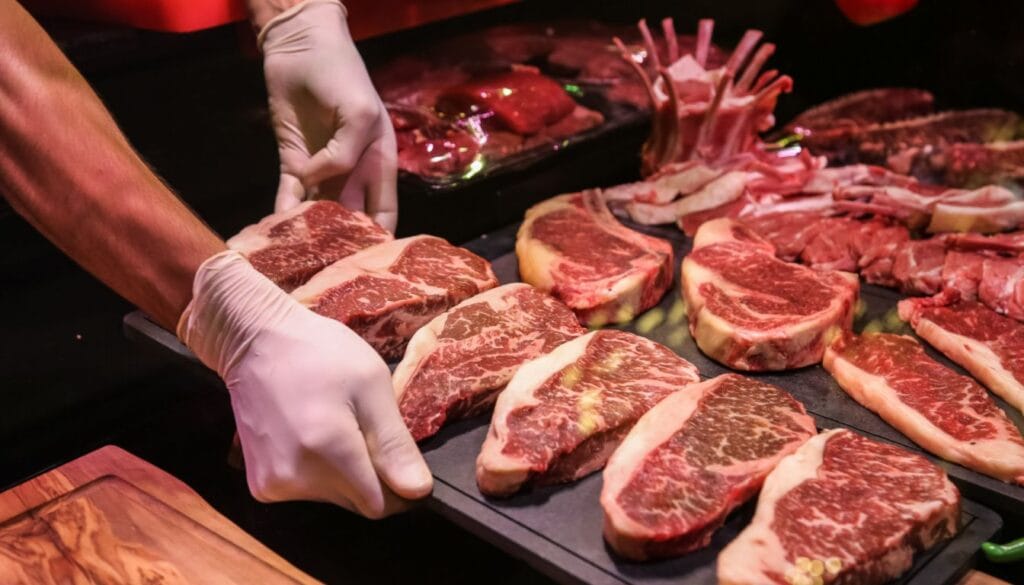
Choosing the perfect tomahawk ribeye steak is a task that needs careful thought and skill. The best tomahawk recipe begins with picking a top-notch cut. This will make your meal even more special.
When searching for the ultimate tomahawk steak, keep these key points in mind:
- Marbling: Look for extensive white fat streaks throughout the meat
- Color: Seek a bright, cherry-red appearance
- Thickness: Aim for steaks between 2-3 inches thick
- Bone length: Ensure a clean, well-frenched bone of 5-8 inches
Beef grade matters significantly when selecting your tomahawk steak. The USDA grading system gives important clues about meat quality:
| Beef Grade | Marbling | Quality Rating |
| Prime | Abundant | Highest Quality |
| Choice | Moderate | High Quality |
| Select | Minimal | Standard Quality |
Professional butchers suggest choosing Prime or Choice grades for the best tomahawk ribeye steak. Building a relationship with a trusted local butcher is key. They can help you find premium cuts and offer expert advice.
Pro tip: Always ask your butcher about the steak’s origin, aging process, and recommended cooking methods.
Preparing Your Tomahawk Steak for Cooking
Preparing a steak needs careful attention to detail. This ensures a top-notch meal at home. Knowing how to cook a tomahawk steak starts long before it hits the heat.
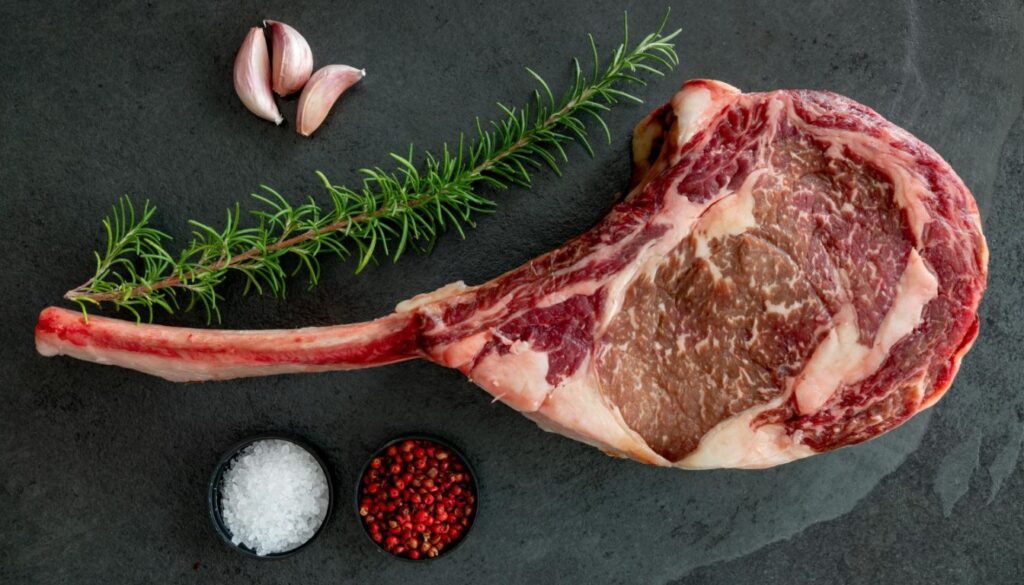
Room Temperature Principles
It’s key to bring your steak to room temperature for even cooking. Cold meat from the fridge cooks unevenly, leading to a less-than-perfect dish. Take the steak out of the fridge 30-45 minutes before cooking. This lets it warm up slowly.
Tomahawk Steak Seasoning Techniques
- Pat the steak dry with paper towels
- Use kosher salt all over the steak
- Freshly ground black pepper adds strong flavor
- Try specialized tomahawk steak seasoning blends
Pre-Cooking Preparation Steps
Successful tomahawk steak preparation involves several key steps:
- Check the steak for excess fat or silver skin
- Trim off any unnecessary fat carefully
- Make sure the meat is dry before seasoning
- Use a paper towel to remove moisture
The aim of these steps is to create a perfectly seasoned, evenly cooked tomahawk steak. This will impress even the most picky meat lovers. Proper preparation is the key to a great culinary experience.
Classic Tomahawk Steak Seasonings and Rubs
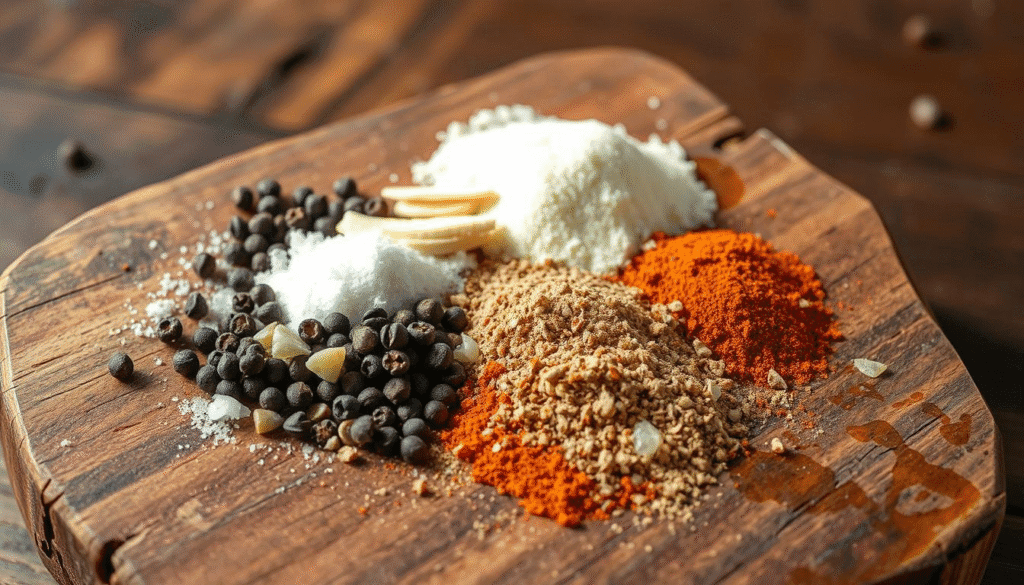
Making the perfect tomahawk steak seasoning is an art. It turns a great cut of meat into a culinary masterpiece. The right spices bring out the steak’s rich flavors, making it a dish to remember.
Seasoning is key in creating the best steak recipe. A classic dry rub adds depth and complexity. Here’s a top-notch seasoning blend for your tomahawk steak:
- 2 tablespoons kosher salt
- 2 tablespoons coarse black pepper
- 1-2 tablespoons garlic powder
- 1 tablespoon dried thyme
- 1 tablespoon dried rosemary
- 1 tablespoon paprika
- Pinch of red pepper flakes
Experts say to season the steak well, covering it all. Pat the steak dry before seasoning to help the spices adhere better. Let the seasoned steak rest at room temperature for 30-45 minutes before cooking.
| Seasoning Type | Flavor Profile | Best Cooking Method |
| Classic Dry Rub | Bold, Savory | Grilling |
| Herb-Infused Blend | Aromatic, Earthy | Reverse Searing |
| Spicy Cajun Rub | Intense, Spicy | High-Heat Searing |
Try different tomahawk steak seasonings to find your favorite. The goal is to find the right balance of salt, herbs, and spices. This way, you enhance the meat’s natural flavor without overpowering it.
Different Methods to Cook Tomahawk Steak
Learning how to cook a steak involves knowing several cooking techniques. Each method has its own benefits for getting that perfect taste. Let’s look at the top tomahawk steak grilling techniques to enhance your cooking.
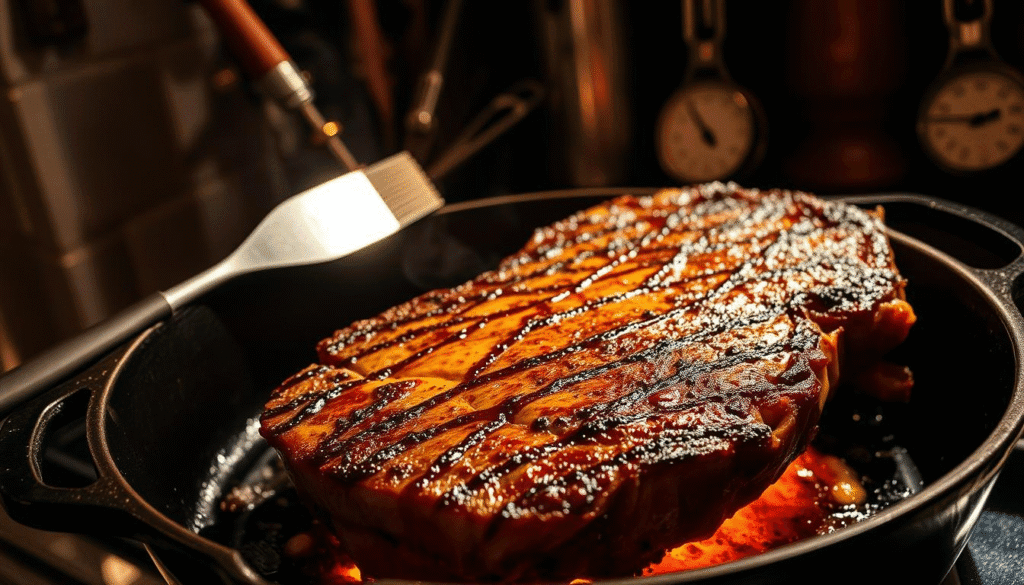
Cooking a tomahawk steak is like an art that needs precision and knowledge. Both professional chefs and home cooks have found reliable ways to cook this impressive meat.
Grilling Method: The Classic Approach
Grilling is the most common way to cook a tomahawk steak. It uses direct heat for great flavor.
- Preheat grill to high temperature (450-500°F)
- Season steak generously with salt and pepper
- Sear each side for 3-4 minutes
- Move to indirect heat to finish cooking
- Use meat thermometer to check internal temperature
Oven-Roasting Technique: Indoor Perfection
If you don’t have a grill, oven-roasting is a great alternative for cooking a delicious tomahawk steak.
- Preheat oven to 275°F
- Place steak on a wire rack
- Cook until internal temperature reaches 125°F
- Finish with a quick sear in a hot skillet
Reverse Searing Approach: Precision Cooking
Reverse searing is popular for its ability to cook the steak evenly and create a perfect crust.
| Cooking Stage | Temperature | Duration |
| Low-Temperature Oven | 275°F | 45-60 minutes |
| High-Heat Sear | 500°F | 2-3 minutes per side |
Each steak grilling technique has its own advantages. The important thing is to choose a method that fits your cooking tools and taste preferences.
Temperature Guide for Perfect Doneness
Cooking a tomahawk steak to perfection needs precise temperature control. Knowing the internal temperatures and doneness levels is crucial.
An instant-read thermometer is your best friend when cooking a tomahawk steak. Each doneness level has a specific temperature range. This range affects the steak’s texture and taste.
- Rare: 125°F – Deep red center, soft texture
- Medium-Rare: 135°F – Warm red center, most preferred by steak enthusiasts
- Medium: 145°F – Pink center with more firmness
- Medium-Well: 150°F – Slight pink center
- Well-Done: 160°F – Little to no pink
For cooking a tomahawk steak, knowing about carryover cooking is important. The meat keeps cooking after it’s removed from heat, usually by 5-10 degrees. So, take the steak out a bit before it reaches your desired temperature.
Pro tip: Always let your steak rest for 5-10 minutes after cooking to allow juices to redistribute.
Get a reliable digital meat thermometer for consistent results. It’s essential for cooking this impressive beef cut.
Creating Restaurant-Style Garlic Butter Sauce
To make your best tomahawk steak recipe even better, add a delicious garlic butter sauce. This sauce turns a great steak into a true masterpiece. It makes your meal feel like you’re dining at a fancy restaurant.
Start with top-notch ingredients for your garlic butter sauce. Choose fresh, quality items that will make your sauce stand out.
Essential Ingredients
- 4 tablespoons unsalted butter
- 4-5 fresh garlic cloves
- Fresh thyme sprigs
- Kosher salt
- Freshly ground black pepper
Preparation Technique
- Roast garlic cloves until golden and fragrant
- Melt butter in a skillet over low heat
- Squeeze roasted garlic into melted butter
- Add thyme sprigs
- Stir gently for 2 minutes
The secret to this sauce is its simplicity. Roasting the garlic beforehand adds a deep, nutty flavor. It turns regular butter into a rich sauce for your steak.
“A great sauce can turn a good steak into an unforgettable meal.” – Professional Chef
Pro tip: Make the sauce while your steak is resting. This ensures the flavors mix well and the sauce is warm when you serve it.
Resting and Serving Your Tomahawk Steak
Cooking a tomahawk steak is more than just cooking. The final steps of resting and serving are key to a top-notch meal. They will impress anyone who loves steak.
After cooking your steak perfectly, resting is crucial. This step lets the juices spread evenly, making each bite juicy and full of flavor. A good resting technique can make your meal even better.
- Remove the steak from heat source
- Tent loosely with aluminum foil
- Let rest for 10-15 minutes
- Keep the steak in a warm area
When you serve, how you present it is just as important as how you cook it. Here are some tips to enhance your tomahawk steak experience:
| Serving Style | Description |
| Whole Steak | Dramatic presentation with full bone-in display |
| Pre-Sliced | Easier eating, showcase internal doneness |
| Family-Style | Slice against the grain on a shared platter |
To enjoy it best, slice the tomahawk steak against the grain. This makes it tender. Use a sharp knife and steady hand for perfect slices that show off the steak’s quality.
Side Dish Suggestions
Enhancing your tomahawk steak meal is more than just cooking it right. The perfect side dishes can make it truly special.
Choosing side dishes for your tomahawk steak is all about balance. Look for sides that contrast the meat’s richness. They should also offer different textures and flavors.
Recommended Side Dishes:
- Roasted garlic mashed potatoes
- Grilled asparagus
- Truffle mac and cheese
- Crispy Brussels sprouts
For a special touch, try a peppercorn cream sauce. It will bring your tomahawk steak to a new level, making it feel like a restaurant dish at home.
Conclusion
Cooking the perfect tomahawk steak is more than a skill, it’s an art. It turns a special cut of meat into a memorable meal. In this guide, we’ve covered the key techniques for cooking a tomahawk steak.
Preparing a tomahawk steak needs careful attention. You must choose the best meat and cook it at the right temperature. You also need to know how to season, choose a cooking method, and make sauces that bring out the steak’s flavors.
Now, home chefs can cook a tomahawk steak with confidence. By using the tips from this guide, you can make a meal that will wow your family and friends. Remember, the more you practice, the better you’ll get. Each time, you’ll learn more and appreciate this amazing beef cut even more.
Your journey with the tomahawk steak is just starting. Dive into it, try new things, and enjoy the tasty results of your growing skills.
FAQ
What exactly is a tomahawk steak?
A tomahawk steak is a premium cut of meat. It has a long bone that looks like a Native American tomahawk axe. This steak is thick, with lots of marbling, giving it a rich flavor. It usually weighs between 30-45 ounces.
Why are tomahawk steaks more expensive than other cuts?
Tomahawk steaks cost more for several reasons. They need skilled butchery and use a big part of the ribeye. They also look impressive and have a lot of marbling. The bone-in preparation adds to the price.
What’s the best way to cook a tomahawk steak?
Grilling, reverse searing, and oven-roasting are top methods. Start with a high-heat sear for a crust. Then, finish it in the oven or on a low-heat grill. This ensures even cooking and keeps the steak moist.
How long should I let a tomahawk steak rest after cooking?
Let the steak rest for 10-15 minutes after cooking. This lets the juices spread evenly, making the steak tender and flavorful. Cover it loosely with foil to keep it warm.
What internal temperature should I aim for when cooking a tomahawk steak?
The ideal temperature varies by doneness. Aim for 125°F for rare, 135°F for medium-rare, and 145°F for medium. Use a meat thermometer for accurate results.
What are the best seasonings for a tomahawk steak?
Kosher salt and black pepper are great. For more flavor, try herbs like rosemary and thyme. Or, make a dry rub with garlic powder, paprika, and spices.
How do I choose a high-quality tomahawk steak?
Look for steaks with lots of marbling and a bright red color. Choose USDA Prime or Choice grades. The meat should have even fat distribution and look fresh.
Can I cook a tomahawk steak indoors?
Yes, you can cook it indoors in a cast-iron skillet or by searing on the stovetop and finishing in the oven. The reverse sear method is especially good for indoor cooking.
How long can I store a raw tomahawk steak?
Raw tomahawk steaks can last 3-5 days in the fridge if wrapped right. For longer, freeze it for up to 12 months. Proper packaging is key to prevent freezer burn.
There are no reviews yet. Be the first one to write one.