
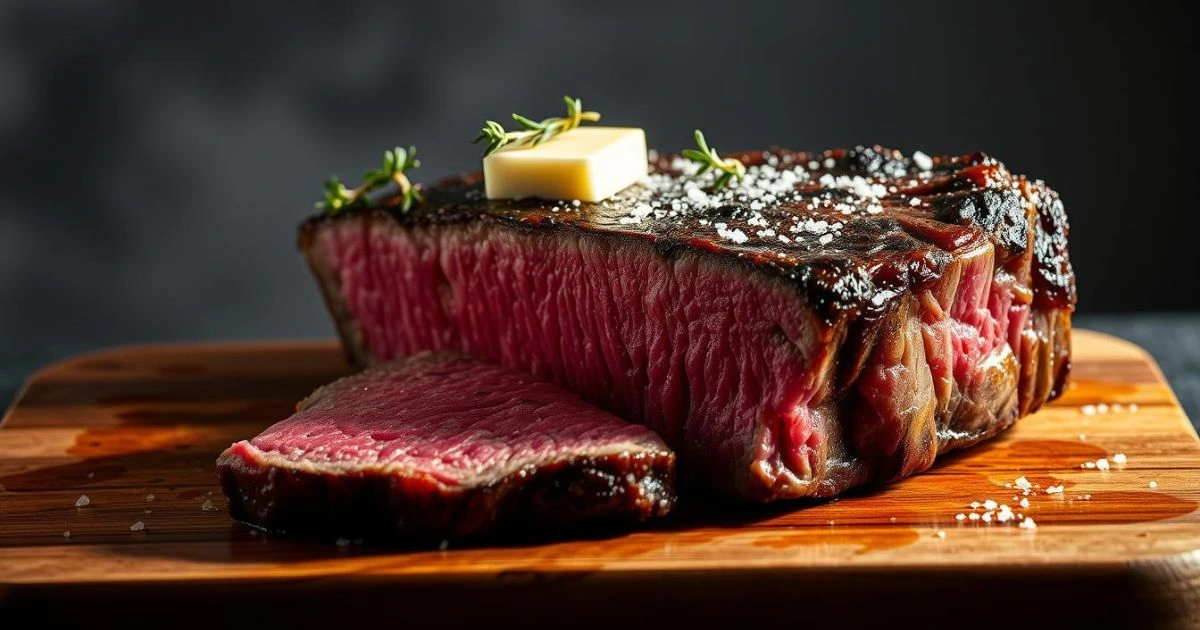
Every food lover remembers that first bite of a truly exceptional steak. For me, it was a transformative moment at a small steakhouse in Chicago. The dry aged steak melted like butter on my tongue, revealing depths of flavor I never knew existed.
Dry aged steak is the top of culinary craftsmanship. This special technique turns ordinary beef into an extraordinary dining experience. Professional chefs and passionate home cooks know that premium steak is not just about the cut. It’s about carefully controlled aging that makes the flavor and tenderness better.
The art of dry aging beef is a detailed process. Large meat cuts are stored under precise environmental conditions. During this time, natural enzymes break down muscle fibers. This concentrates the beef’s rich flavors and creates an unparalleled texture.
Serious meat enthusiasts know that true flavor development requires patience. Each week of aging brings more depth, complexity, and a remarkable concentration of beefy essence. This elevates the entire dining experience.
In this guide, we’ll explore the fascinating world of dry aged steak. We’ll uncover its secrets, techniques, and the culinary magic that transforms a simple cut of beef into a gourmet masterpiece.
Table of Contents
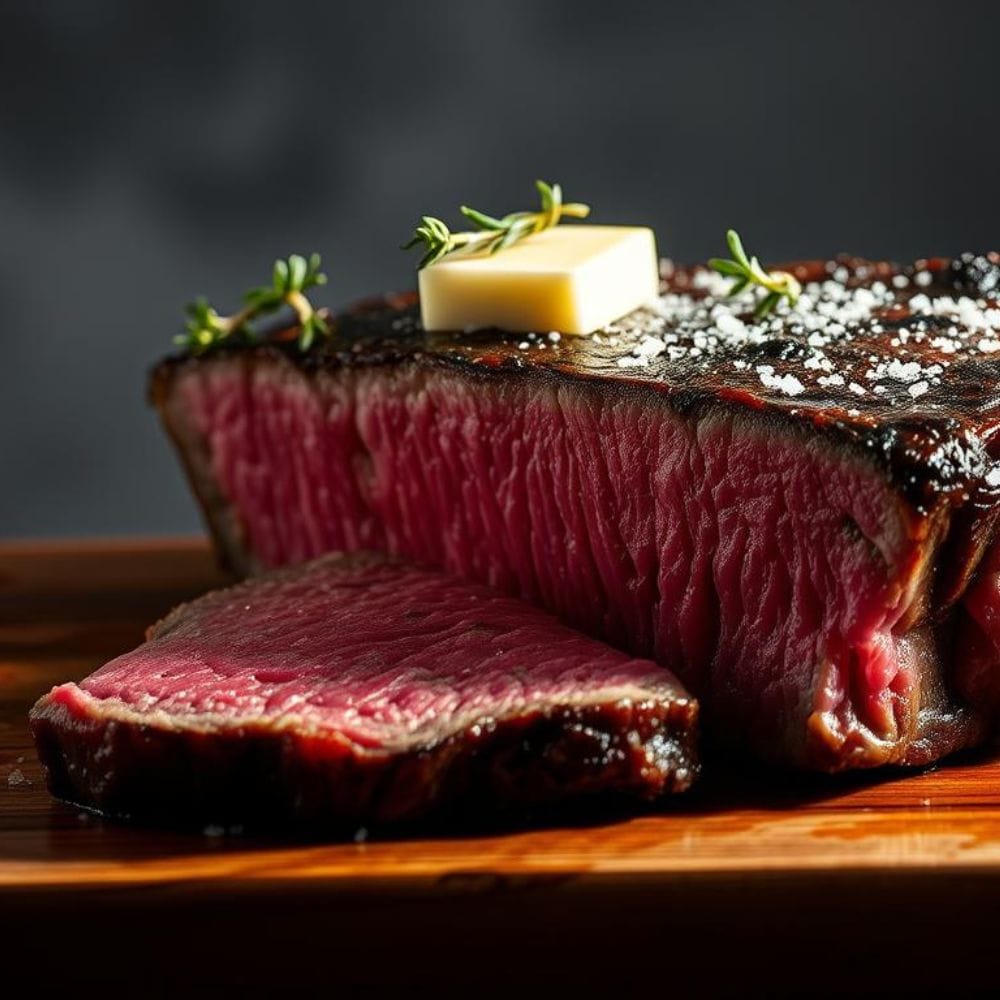
dry aged steak
Ingredients
Equipment
Method
- Bring to Room Temperature: Remove steak from refrigerator 30–45 minutes before cooking.
- Pat Dry: Use paper towels to remove surface moisture for a perfect sear.
- Season Lightly: Sprinkle both sides with kosher salt and pepper. Avoid heavy seasonings.
- Preheat Pan: Heat cast iron skillet until smoking hot.
- Sear Steak: Add oil and sear steak for 3–4 minutes per side to create a crust.
- Add Butter & Herbs: Baste with melted butter and herbs during final minute.
- Check Temperature: Use a meat thermometer; remove steak when 5°F below target doneness.
- Rest Steak: Let rest 5–10 minutes before slicing to retain juices.
- Serve & Enjoy: Pair with sauce and sides of your choice (e.g., Béarnaise, peppercorn sauce, or balsamic glaze reduction).
Notes
- Best Cuts: Ribeye, strip loin, and tenderloin yield the richest results.
- Aging Tip: Maintain 80–85% humidity and 34–38°F temperature for safety and flavor.
- Storage: Vacuum seal and refrigerate for up to 7 days or freeze up to 3 months.
- Cooking Tip: Use reverse sear for uniform doneness and perfect crust.
- Flavor Profile: Expect nutty, earthy, and buttery notes from proper dry aging.
Understanding the Art of Dry Aged Steak
Dry aging beef turns regular cuts into special dining moments. This method uses controlled conditions to boost the meat’s flavor and tenderness.
The art of dry aging is a mix of science, tradition, and skill. Butchers and chefs have honed this technique over years. They’ve made meat quality truly remarkable.
The Science Behind Aging Process
Dry aging uses precise controls to preserve meat. Key scientific steps happen during this time:
- Enzymatic breakdown of muscle fibers
- Controlled moisture evaporation
- Concentration of flavor compounds
- Natural tenderization of meat
Historical Origins of Dry Aging
Dry aging has ancient roots, used before refrigeration. Communities long ago found ways to keep meat fresh and tasty.
| Historical Period | Dry Aging Technique | Primary Purpose |
| Medieval Era | Salt preservation and air drying | Food preservation |
| Renaissance | Controlled cellar aging | Flavor enhancement |
| Modern Era | Precision climate-controlled rooms | Gourmet meat preparation |
Modern Dry Aging Techniques
Today, dry aging uses advanced tech to make premium aged beef. Butchers use special refrigerators to control humidity and temperature. This ensures top-notch meat quality.
Experts and meat lovers see dry aging as a high-end cooking art. It turns simple cuts into unforgettable meals.
Benefits of Choosing Dry Aged Beef
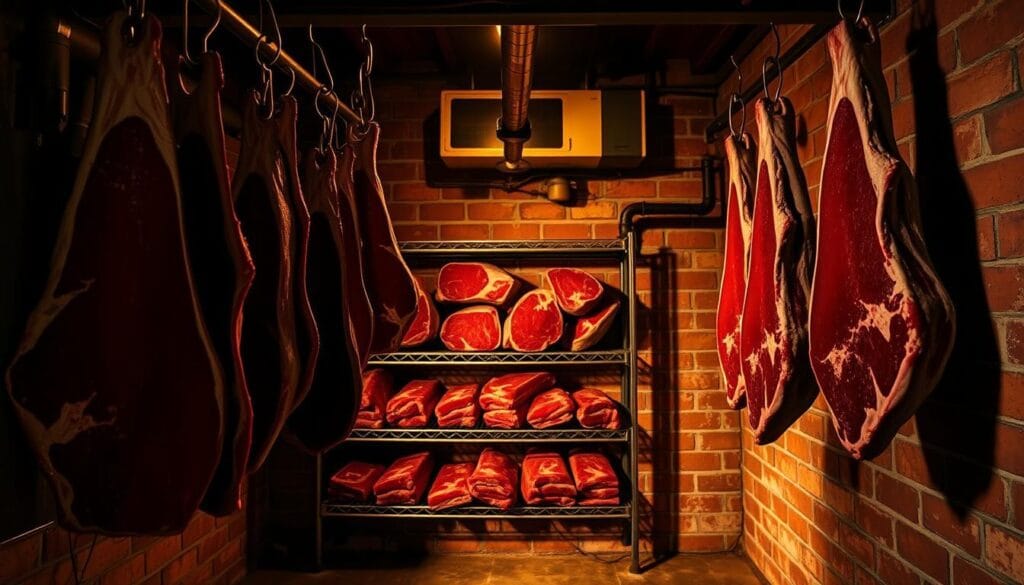
Gourmet meat lovers know the magic of dry aging. Best aged steaks are a true art form. They take beef to new heights of taste and texture.
The dry aging process brings out amazing qualities in beef. It’s a special transformation that makes the meat even better.
- Enhanced Flavor Profile: Dry aging adds complex, nutty undertones that regular meat can’t match
- Increased Tenderness: The meat becomes softer, making it a pleasure to eat
- Concentrated Taste: The natural flavors of beef become stronger and more intense
Top chefs love dry aged beef for its special qualities. The aging process creates a crust that seals in flavors. This makes the meat tender from the inside out.
“Dry aging transforms good beef into an extraordinary culinary experience.” – Culinary Institute of America
Choosing dry aged gourmet meat means a better dining experience. Best aged steaks offer rich flavors, tender meat, and a memorable meal. They make any meal special.
The Perfect Temperature and Environment for Aging
Making top-notch steakhouse quality meats needs skill and precision, especially in aging. The careful aging of beef requires close attention to the environment. This turns regular cuts into unforgettable dishes.
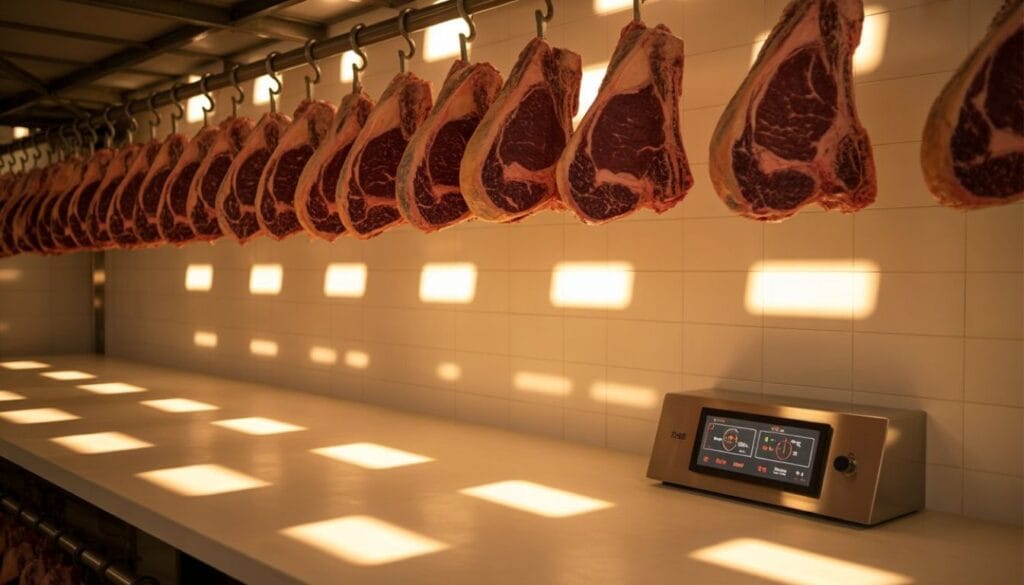
Keeping the right temperature is key for dry aging success. Butchers and steakhouse pros know that a small temperature range is crucial. It can make or break the aging process.
Humidity Control Essentials
Managing moisture is vital in preparing specialty meats. The best humidity is between 80-85%. This keeps moisture in and stops bad bacteria from growing.
- Optimal humidity prevents meat from drying out completely
- Controlled moisture creates ideal aging conditions
- Prevents potential spoilage risks
Time Duration Impact
The length of aging greatly affects the taste of steakhouse meats. Short aging (14-28 days) adds a bit of flavor. Longer aging (45-60 days) brings out deeper, richer tastes.
Equipment Requirements
For professional dry aging, you need special gear to keep conditions just right. Important items include:
- Dedicated refrigeration units with temperature control
- Humidity monitoring systems
- Air circulation mechanisms
- Stainless steel racks for proper meat placement
Pro tip: Invest in top-grade equipment for consistent, high-quality dry aging results.
Selection Guide: Choosing Quality Cuts for Aging
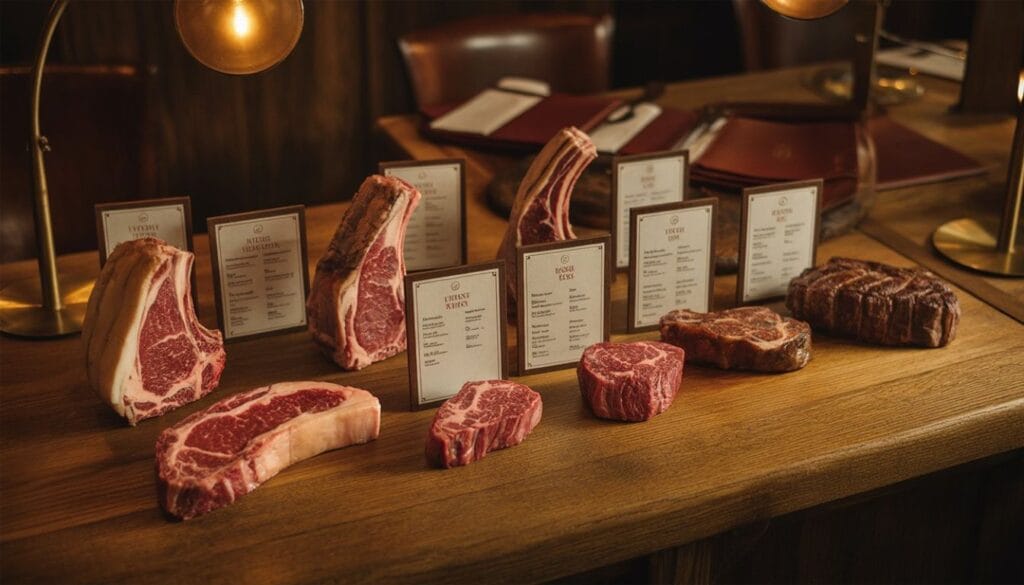
Choosing the right cuts for dry aging is an art. It’s what sets amateur cooks apart from true steak lovers. Not all beef is the same when it comes to making premium steak. The secret is knowing which steak cuts will turn into amazing aged dishes.
When looking for the perfect cuts, keep these points in mind:
- High marbling content
- Thick, substantial muscle groups
- Fresh beef from trusted sources
- Consistent muscle density
Some cuts age better than others. Ribeyes and strip loins are top choices for aging. They have the right mix of fat and muscle for the best flavor.
| Cut Type | Aging Suitability | Flavor Profile |
| Ribeye | Excellent | Rich, buttery |
| Strip Loin | Very Good | Robust, intense |
| Tenderloin | Good | Mild, delicate |
Butchers say to pick cuts at least 1.5 inches thick. This helps keep moisture and flavor in during aging. Stay away from cuts with too much connective tissue or uneven fat.
The secret to exceptional dry-aged beef is not just in the cut, but in the careful selection and preparation.
Essential Preparation Techniques for Dry Aged Steak
To make the best aged steaks, you need to pay close attention to detail. Understanding specific techniques is key to bringing out the meat’s natural flavors. Learning how to dry age beef turns an ordinary cut into a culinary masterpiece.
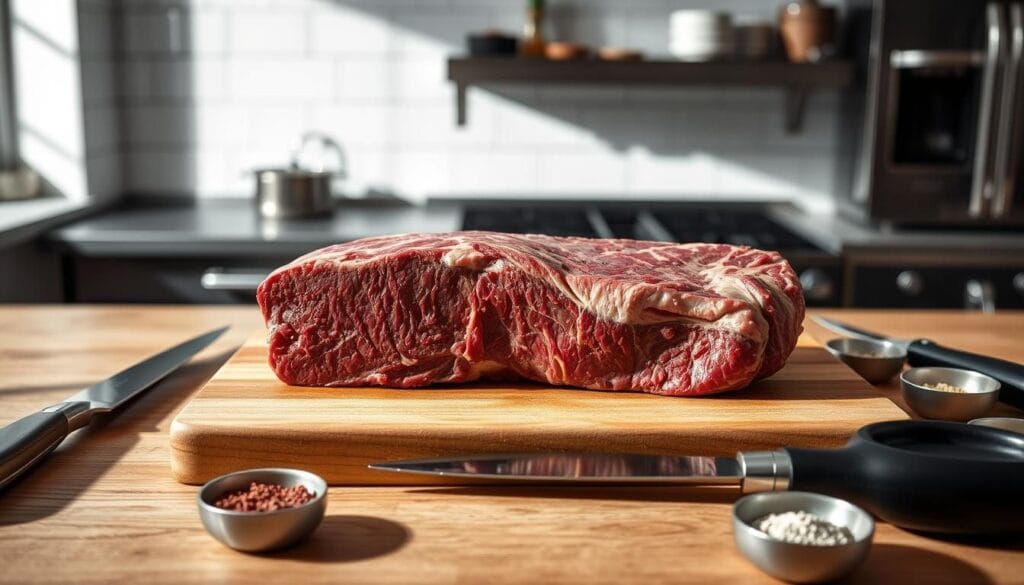
Seasoning Methods for Maximum Flavor
Seasoning dry aged beef needs a gentle touch. These premium steaks have unique flavors that should be preserved. Professional chefs suggest:
- Use coarse kosher salt to enhance natural beef flavors
- Freshly ground black pepper for subtle heat
- Avoid complex seasoning blends that mask the meat’s richness
Room Temperature Preparation
It’s important to bring your steak to room temperature before cooking. Typically, remove the steak from refrigeration 30-45 minutes before cooking. This ensures even cooking and a perfect sear.
| Steak Thickness | Room Temperature Rest Time | Recommended Technique |
| 1-inch thick | 30 minutes | Loosely tented with foil |
| 1.5-inch thick | 45 minutes | Uncovered on a wire rack |
Pre-Cooking Preparation Steps
Before cooking your dry aged steak, follow these steps:
- Pat the steak completely dry with paper towels
- Trim any excessively dry exterior portions
- Ensure the surface is moisture-free for optimal searing
Pro tip: A perfectly prepared dry aged steak should have a deep, rich color and a firm texture that promises incredible flavor.
Premium Cooking Methods for Aged Beef
To turn a gourmet meat cut into a steakhouse quality dish, you need precision and skill. Dry aged beef needs special care to keep its flavor and tenderness. Both professional chefs and home cooks can improve their steak cooking with expert techniques.
The reverse sear method is a game-changer for cooking dry aged steaks. This method involves:
- Slowly bringing the steak to the perfect internal temperature
- Finishing with a high-heat sear for a crispy, caramelized exterior
- Maintaining the meat’s delicate moisture and rich flavor profile
For the best results, consider these key cooking methods:
- Oven Reverse Sear: Cook at low temperature (225°F) until internal temperature reaches desired doneness
- Cast Iron Skillet Method: Create a perfect golden-brown crust using high heat and minimal oil
- Grilling Technique: Use indirect heat to control cooking, then finish with direct high-heat searing
Professional chefs suggest using a meat thermometer for precise doneness. For steakhouse quality, remove the steak from heat when it’s 5 degrees below your target temperature. It will continue cooking while resting.
The key to an exceptional dry aged steak is respecting the meat’s natural qualities and avoiding overcooking.
Creating Restaurant-Quality Sauces and Accompaniments
Choosing the perfect premium steak is just the start. The right sauce and sides can make a meal unforgettable. It turns a good meal into a special culinary journey.
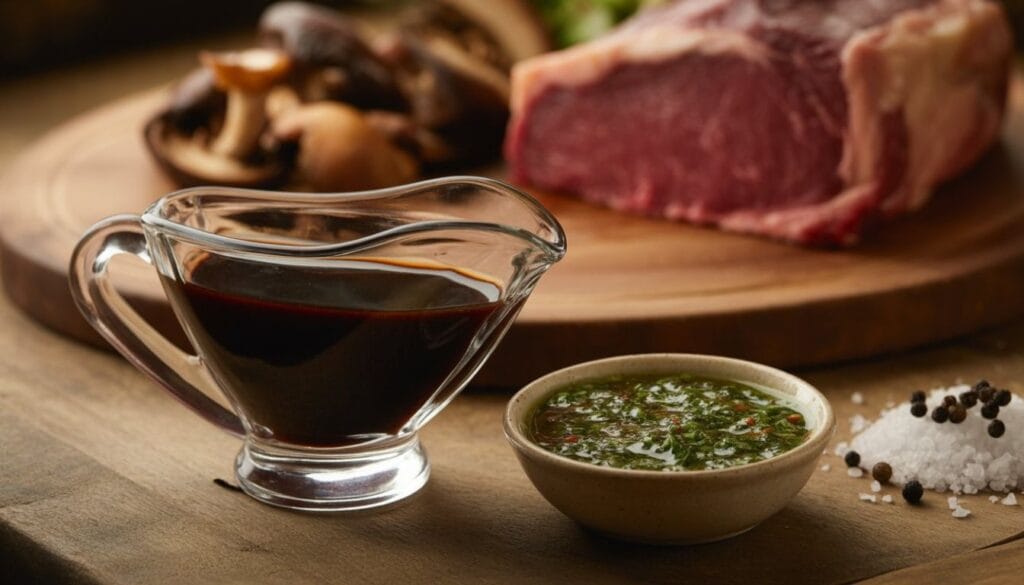
Classic Sauce Pairings for Premium Steak
Making the perfect sauce means knowing what flavors go well with dry-aged beef. Here are some top sauce choices:
- Béarnaise: A rich, buttery sauce with tarragon
- Peppercorn Sauce: Creamy with a spicy kick
- Balsamic Glaze Reduction: Deeply flavorful and tangy
Side Dish Recommendations
Pair your premium steak with sides that match its rich taste:
- Roasted Garlic Mashed Potatoes
- Crisp Arugula Salad
- Grilled Asparagus with Parmesan
- Caramelized Mushroom Medley
Pro tip: Always let your steak rest for 5-10 minutes before serving. This ensures it stays juicy and flavorful.
Expert Tips for Achieving the Perfect Crust
To get the ultimate crust on best aged steaks, you need precision and technique. The secret to making dry aged beef a culinary masterpiece is knowing how to dry age and cook it perfectly.
Professional chefs share some key strategies for an exceptional steak crust:
- Pat the steak completely dry before cooking
- Use a scorching hot cast iron skillet
- Select high-smoke-point oils like avocado or grapeseed
- Allow meat to reach room temperature before cooking
The Maillard reaction turns your steak’s outside into a rich, caramelized crust. This chemical process needs extremely high heat and a dry surface. It creates those golden-brown layers we all love.
“A perfect crust is the hallmark of a truly exceptional steak” – Chef Michael Roberts
Cooking techniques are key to making a great crust. Cast iron skillets are perfect because they hold heat well and cook evenly. This makes them great for getting restaurant-quality results at home.
- Preheat skillet until it’s smoking hot
- Sear steak for 3-4 minutes per side
- Baste with butter and fresh herbs
- Rest meat for 5-7 minutes after cooking
Mastering crust creation turns dry aged beef into a gourmet experience. It will impress even the most picky food lovers.
Understanding Meat Grades and Marbling
Choosing the best cuts of meat means knowing about beef grading and marbling. The quality of a steak is based on several key factors. These include flavor, tenderness, and how it tastes overall.
The USDA grading system is a detailed way to check beef quality. It helps both buyers and chefs find the top-notch meat they need.
USDA Grading Breakdown
Beef is sorted into three main grades:
- Prime Grade: The highest quality with lots of marbling
- Choice Grade: Has moderate marbling, still very good quality
- Select Grade: Leaner meat with little marbling
Marbling Significance
Marbling is the fat inside the muscle that looks like white streaks. This fat is key for rich flavor and tenderness in top cuts.
| Marbling Level | Flavor Intensity | Tenderness Rating |
| High | Extremely Rich | Exceptional |
| Medium | Moderate | Good |
| Low | Mild | Average |
When picking gourmet meat, look for visible marbling. The more detailed the white fat, the better the flavor and tenderness. Chefs and meat lovers know that marbling makes a meal unforgettable.
Storage and Handling Best Practices
Keeping dry aged steak at its best needs careful storage and handling. Both professional chefs and home cooks must follow key steps to keep the beef’s quality high.
Starting with the right temperature is key. Dry aged steak needs cold storage to keep its flavor and prevent spoilage. The ideal fridge temperature is between 34-38°F. This helps keep the meat fresh and stops bacteria from growing.
Essential Storage Guidelines
- Use specialized vacuum-sealed packaging to protect dry aged beef
- Keep aged steak in the coldest part of the refrigerator
- Avoid storing near strong-smelling foods that might impact flavor
- Consume within recommended time frames
Freezing dry aged beef needs extra care. Freezing can change the meat’s texture and flavor.
Freezing Recommendations
| Storage Method | Maximum Recommended Duration | Quality Impact |
| Refrigerated (Vacuum Sealed) | 5-7 days | Minimal Quality Loss |
| Frozen | 2-3 months | Moderate Texture Changes |
When thawing dry aged steak, slow defrosting in the fridge is best. Quick changes in temperature can harm the meat’s texture and taste.
Food Safety Considerations
Always check dry aged beef before cooking. Look for even color, little moisture, and no bad smells. If it looks off or smells bad, throw it away. This ensures a safe and great dining experience.
Specialty Cuts and Their Unique Characteristics
Exploring specialty meats opens up a world of prime cuts that make meals special. Dry-aged beef brings out unique flavors and textures. It turns simple meals into unforgettable dining experiences.
Choosing the right specialty meats is an art. Each cut has its own special qualities. This gives meat lovers a wide range of amazing dining experiences.
Prime Rib: The King of Roasts
Prime rib is known for its tenderness and rich taste. It comes from the rib section, offering a great eating experience. Its marbling and texture make it stand out.
- Exceptional marbling
- Deep, robust flavor
- Ideal for special occasions
Ribeye: Intense Flavor Profile
The ribeye is a top choice in the culinary world. It has a strong beefy flavor. This cut is tender and rich, making it perfect for grilling.
- Rich, buttery texture
- High-fat content
- Excellent for grilling
Tenderloin: Delicate and Refined
Tenderloin is the most delicate specialty meat. It’s incredibly soft and melts in your mouth. Dry aging adds to its elegance, making it a sophisticated choice.
- Extremely tender
- Minimal fat content
- Perfect for elegant presentations
Choosing the right cut makes any meal special. Knowing about these meats lets food lovers create unforgettable experiences. It’s all about celebrating the art of premium beef.
Conclusion
Dry aged steak is a journey into the world of premium steak. It turns regular beef into a culinary masterpiece. This process gives steak lovers a special dining experience.
Learning about dry aging helps both home cooks and restaurant goers. It shows the rich flavors and tenderness of high-quality beef. It’s a sophisticated way to enjoy premium proteins.
Places like Carversteak offer the best dry aged beef. Whether you cook at home or dine out, dry aged steak is a game-changer. It makes a simple steak dinner into a memorable food adventure.
The love for dry aged steak is growing. By learning about aging, choosing the right cuts, and cooking techniques, beef fans can make any meal special. It’s a celebration of the art of preparing premium meat.
FAQ
What exactly is dry aged steak?
Dry aged steak is a special way to prepare beef. It’s stored in a cool, controlled space for weeks (14-45 days). This process makes the meat lose moisture and become more flavorful.
It turns the meat tender and gives it a unique taste, often described as nutty and funky.
How does dry aging affect the taste of beef?
Dry aging makes beef taste better by focusing its natural flavors. It breaks down proteins and fats, making the meat richer and more intense. You’ll notice a nutty and earthy taste.This method also makes the meat tenderer and adds a depth of flavor that regular cooking can’t match.
Is dry aged beef more expensive than regular beef?
Yes, dry aged beef costs more. It needs special storage and careful monitoring. Also, a lot of weight is lost during aging (15-35% of the original).The equipment and precise conditions needed add to the cost. This makes dry aged steaks pricier.
What are the best cuts for dry aging?
The top cuts for dry aging are ribeye, strip loin, and prime rib. They have lots of fat and muscle, which helps during aging. Beef from Prime or Choice grades works best for flavor and tenderness.
How long can beef be dry aged?
Beef can be dry aged from 14 to 45 days. Shorter times give a milder flavor, while longer times make it more intense. After 45 days, the flavor can get too funky for some.
What equipment is needed for dry aging beef at home?
You’ll need a fridge that can keep a steady temperature (32-39°F) and good air flow. It should also have humidity control (80-85%). You’ll also need a cutting board, sharp knife, wire rack, and a hygrometer to check humidity.
How should dry aged steak be cooked?
Cook dry aged steak quickly using high heat. Start by letting it come to room temperature. Pat it dry and cook it fast to get a great crust.Use a meat thermometer to check the doneness. Avoid overcooking to keep the meat tender and flavorful.
Is dry aged beef safe to eat?
Yes, dry aged beef is safe when done right. Meat processors follow strict safety rules. The aging process actually helps prevent harmful bacteria while improving the meat’s quality.
Can all types of meat be dry aged?
While beef is most common, some producers also dry age lamb and game meats. But beef is still the best choice because of its fat and flavor. Not all cuts work well for dry aging, though.
There are no reviews yet. Be the first one to write one.