
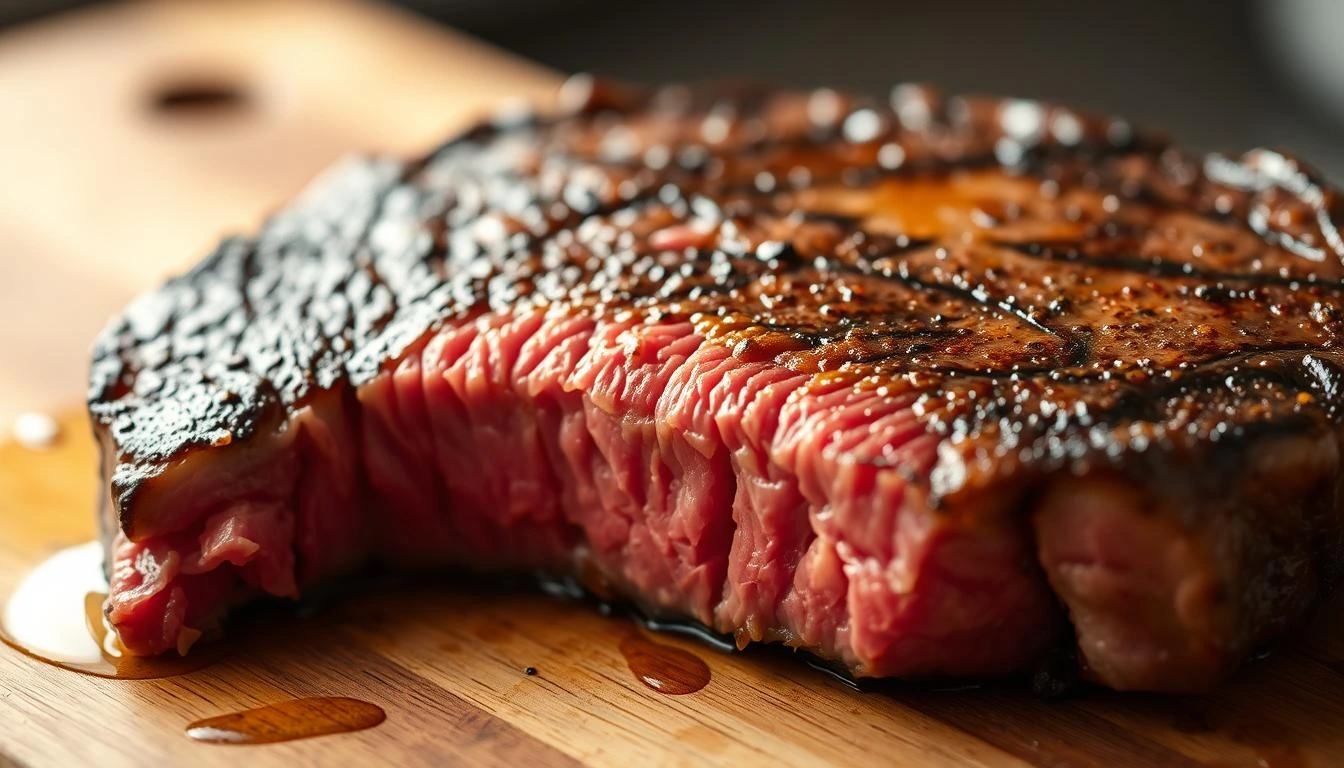
The first time I saw a master chef cook a blue rare steak, I was amazed. The way he cooked it was like art. This steak is more than just cooking; it’s a way to show love for meat.
For those who love steak, cooking it blue rare is a big deal. It takes skill and knowledge of good beef. It’s not just eating meat; it’s enjoying its true taste and texture.
Blue rare steak needs a special touch. You want the outside tof be golden and the inside to be red and juicy. This way, the steak becomes a feast for your senses.
In our guide, we’ll show you how to make the perfect blue rare steak. We’ll cover everything from choosing the right cuts to perfecting the searing technique. You’ll learn to cook like a pro.
Table of Contents
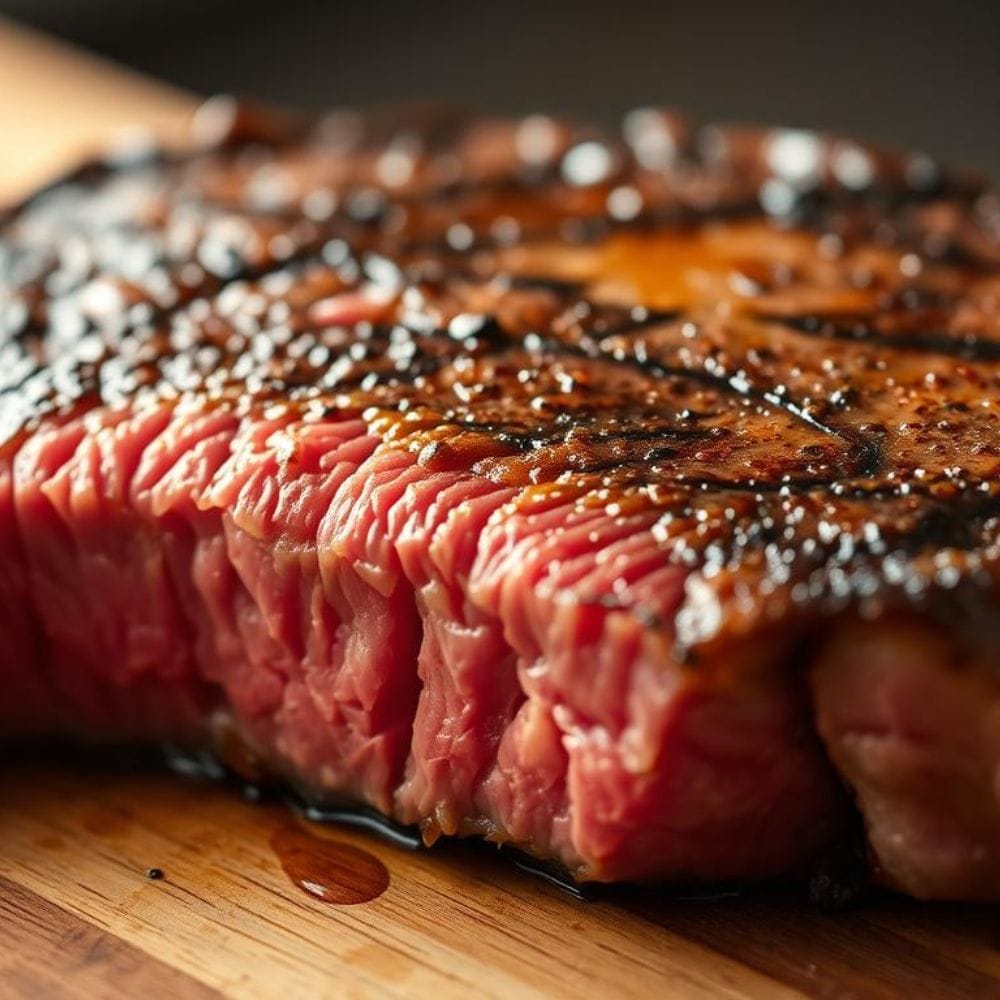
Blue rare steak
Ingredients
Equipment
Method
- Prep: Bring steak to room temperature (30–45 min) and pat dry.
- Season: Lightly salt and pepper just before cooking.
- Heat Pan: Preheat cast iron skillet until smoking hot; add a bit of oil.
- Sear: Cook 30–45 sec per side for a golden crust, inside stays cool red.
- Check Temp: Internal temperature should reach 115–120°F.
- Rest: Let rest 3–5 min under loose foil.
- Slice & Serve: Cut against the grain and serve immediately.
Notes
Understanding Blue Rare Steak Temperature and Safety
Blue rare steak is a favorite among steak lovers for its taste and texture. But, it’s important to know the right temperature to avoid food safety issues.
The temperature for this steak is between 115-120°F. This is much lower than what the USDA suggests for safety. They recommend cooking beef to at least 145°F for safety.
Optimal Internal Temperature Range
Chefs must carefully control the temperature when cooking blue rare steak. The right temperature is key for flavor and safety. Here are some important temperature points to remember:
- Blue rare: 115-120°F internal temperature
- Sear time: Minimal external cooking
- Center remains deep red and cool
Food Safety Guidelines for Raw Beef
Eating blue rare steak comes with some risks. Bacteria can be present if not handled properly. Here are some safety tips:
- Purchase high-quality meat from reputable sources
- Inspect meat for freshness before cooking
- Use clean cooking surfaces
- Avoid cross-contamination
Quality Meat Selection Criteria
Choosing the right cut is crucial for blue rare steak safety. Fresh, high-grade beef from trusted suppliers minimizes potential health risks. Look for meat that is:
- Bright red color
- Firm texture
- Minimal surface moisture
- Proper refrigeration
Professional chefs say that while this steak is a unique culinary experience, safety should always come first.
Essential Equipment for Cooking the Perfect Blue Rare
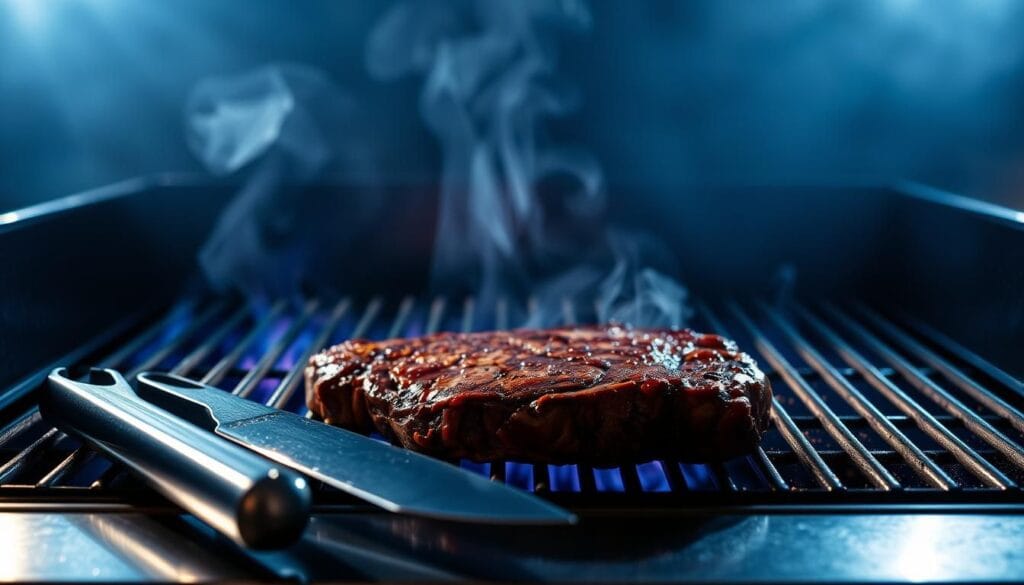
Learning to cook blue rare steak is more than just knowing how to cook. It’s about having the right tools. Professional chefs say the right equipment can turn a good steak into an amazing one.
To cook blue rare steak, you’ll need a few important tools:
- Cast Iron Skillet: The best for a perfect sear
- Precise Digital Meat Thermometer
- Heavy-Duty Tongs
- Quality Cutting Board
- Sharp Chef’s Knife
The cast iron skillet is key for cooking blue rare steak. It keeps the heat even, giving a great crust and a tender inside.
A digital meat thermometer is vital for the right temperature. It ensures the steak is cooked to 115-120°F, just right for blue rare.
“Equipment is the foundation of great cooking—choose wisely and your steak will thank you.”
Using top-notch cooking tools makes cooking blue rare steak an art. Each tool is important for a great dining experience at home.
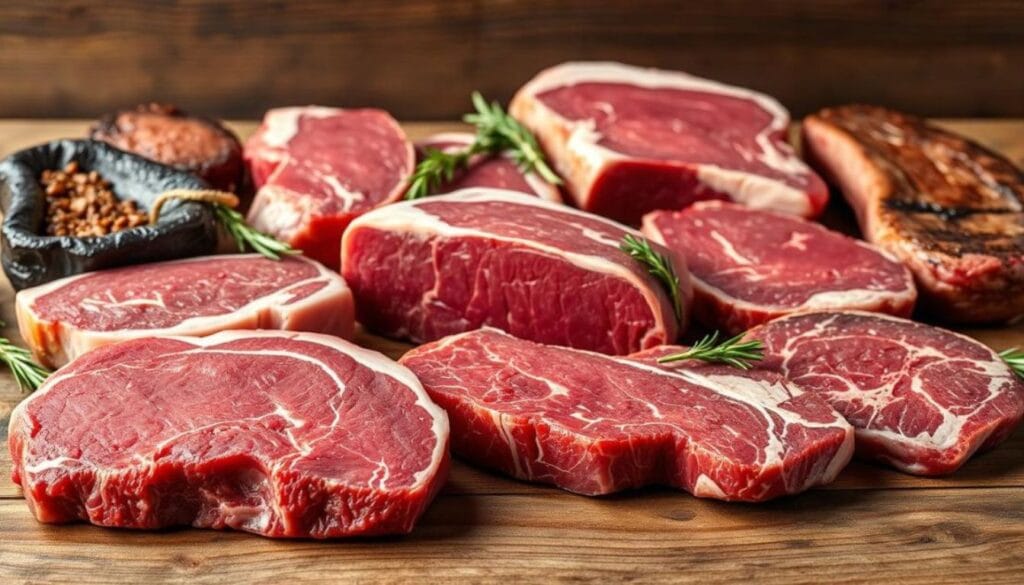
Selecting Premium Cuts for Blue Rare Steak
Choosing the right blue rare steak cut is key for a great meal. The quality of your beef affects the taste, tenderness, and enjoyment of your meal.
Best Steak Grades for Blue Rare Cooking
When picking a blue rare steak, USDA grading is important. Prime grade beef is the best for meat lovers. It offers:
- Exceptional marbling
- Superior flavor profile
- Maximum tenderness
Ideal Thickness and Marbling
The perfect blue rare steak needs careful thought on thickness and marbling. Aim for cuts between 1 to 1.5 inches thick. This allows for precise temperature control and perfect searing.
Popular Cuts for Blue Rare Preparation
Not all steak cuts are the same. The best options are:
- Tenderloin steak: Incredibly tender with minimal fat
- Ribeye steak: Rich marbling and intense flavor
- NY Strip steak: Balanced texture and taste
Each steak cut has its own special qualities. Choose wisely for a meal you’ll remember.
Preparation Techniques and Room Temperature Rules
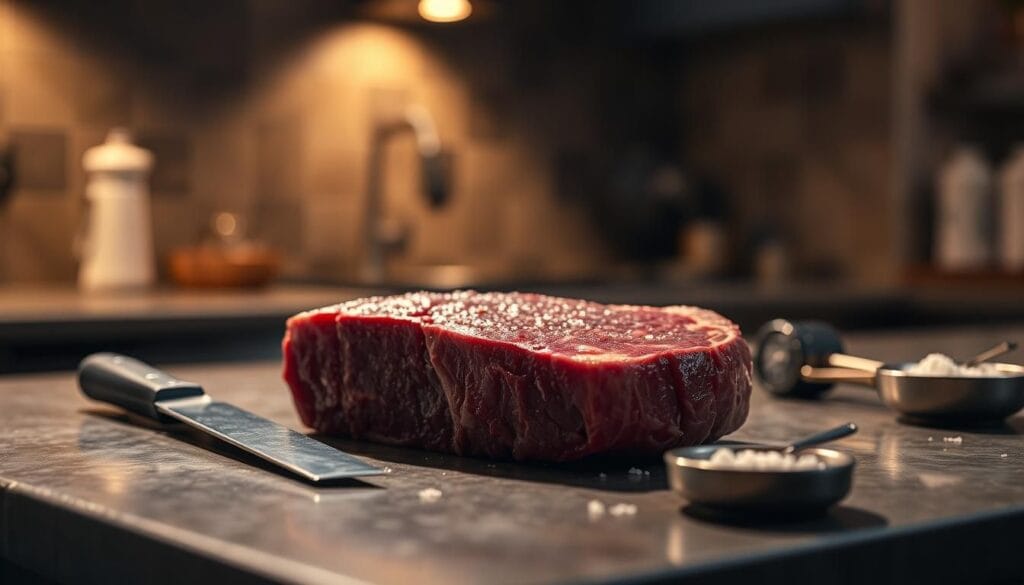
Cooking blue rare steak needs precision from the start. The prep process is key to getting that perfect, tender steak everyone loves. Professional chefs know that the success of cooking starts before the meat hits the heat.
Room temperature is very important for cooking blue rare steak. Cold meat can lead to uneven cooking and ruin the tender texture you want. Here are some important steps to follow:
- Remove steak from fridge 30-45 minutes before cooking
- Pat the meat dry with paper towels
- Make sure the surface is dry for the best sear
Proper preparation turns an ordinary steak into a culinary masterpiece. You aim for a perfect outside while keeping the inside cool and raw, just like blue rare.
“Preparation is 90% of great cooking” – Professional Chef’s Wisdom
When cooking blue rare steak, pay close attention to detail. Wipe the meat dry to remove excess moisture, which helps with caramelization. A dry surface gives you that crisp outside that contrasts with the cool inside.
Seasoning is also crucial. Many experts say to salt just before cooking to keep moisture in. This keeps the meat’s texture perfect and brings out its natural flavors.
Seasoning Methods for Blue Rare Steak
Mastering blue rare steak seasoning is an art. It turns an ordinary cut into a culinary masterpiece. The right seasoning enhances the natural flavors of premium beef without overpowering it.
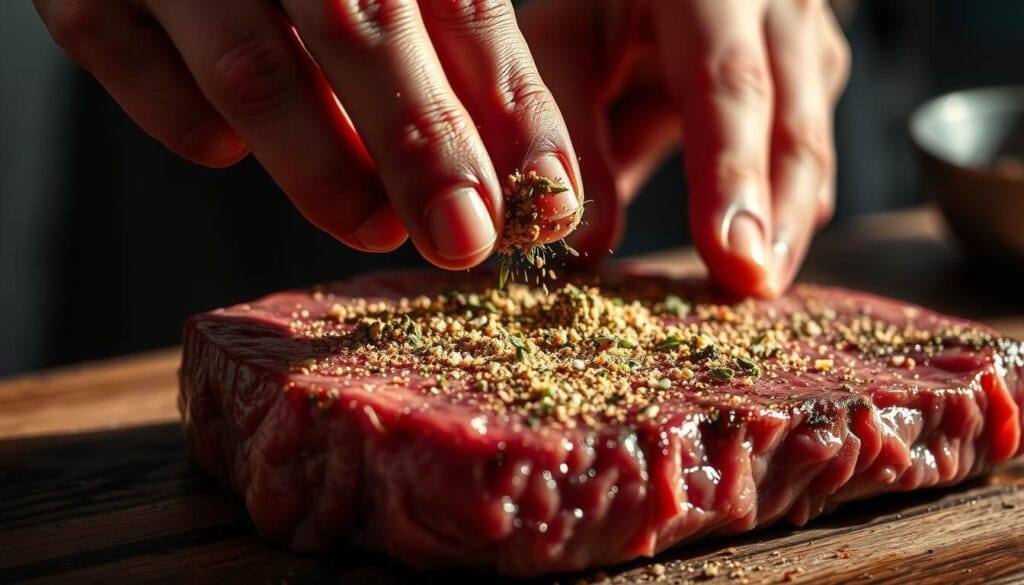
Professional chefs know that seasoning blue rare steak needs a delicate touch. They aim to boost, not hide, the meat’s pure flavor.
Salt Timing and Technique
Salting a blue rare steak at the right time is key. Many experts suggest:
- Salting right before cooking to keep moisture in
- Using coarse kosher salt or sea salt for the best taste
- Spreading salt evenly over the steak’s surface
Complementary Spices and Rubs
Choose spices that complement the beef’s natural taste. Some great choices are:
- Cracked black pepper
- Garlic powder
- Smoked paprika
- Dried herbs like thyme or rosemary
Marinade Options and Impact
For blue rare steak, marinades should be light. A thin layer of olive oil with herbs adds depth without harming the meat. Stay away from acidic marinades that can cook the meat too soon.
“The best blue rare steak seasoning is often the simplest.” – Professional Chef
The secret to amazing blue rare steak seasoning is knowing the meat’s delicate nature. It’s about respecting its natural flavor.
The Perfect Searing Method for Blue Rare
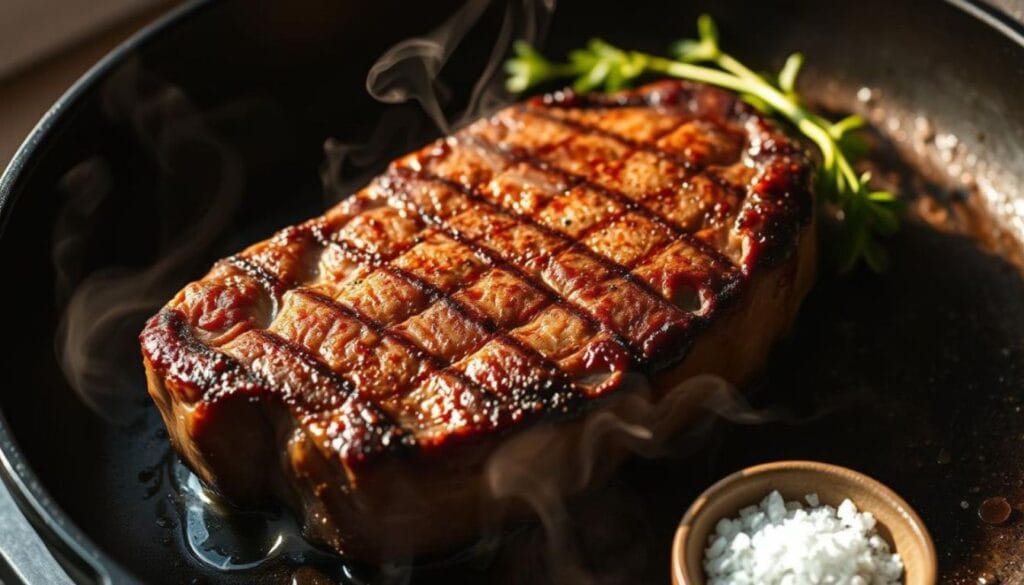
To achieve the perfect crust and tender inside, mastering searing is key. The goal is to get a nice crust on the outside and a cool, raw inside.
Getting ready is key for a great sear. Make sure your steak is dry by patting it with paper towels. This helps create a crispy, golden-brown crust, which is essential for a top-notch blue rare steak.
- Use a cast-iron skillet or heavy-bottomed pan
- Heat the pan until it’s smoking hot
- Add a small amount of high-smoke-point oil
- Sear for only 30-45 seconds per side
The cooking method needs to be precise. The steak needs a quick sear, usually 30-60 seconds per side. Use tongs to handle the steak gently, so you don’t mess up its delicate texture.
Pro tip: A scorching hot pan is your secret weapon for the perfect blue rare steak.
Look for a deep golden-brown crust to know you’ve got the perfect sear. The inside should still be cool and red, which is what makes it blue rare. Quick, high-heat cooking is what makes this technique special.
Cast Iron vs. Grill: Choosing Your Cooking Surface
Choosing the right cooking surface is key when cooking blue rare steak. The method you pick can greatly affect the steak’s taste, texture, and quality. Chefs and home cooks often argue over cast iron skillets versus grilling.
Cast Iron Cooking Advantages
Cast iron is great for cooking blue rare steak because it holds and spreads heat well. The main benefits are:
- Consistent heat across the entire cooking surface
- Ability to create a perfect sear
- Enhanced flavor development
- Versatility for indoor and outdoor cooking
Grilling Techniques for Blue Rare
Grilling has its own perks for cooking blue rare steak. It uses high direct heat for quick searing and keeps the steak’s inside just right.
| Cooking Surface | Heat Control | Sear Quality | Flavor Profile |
| Cast Iron Skillet | Excellent | Uniform | Rich, deep |
| Outdoor Grill | Variable | Distinct grill marks | Smoky, charred |
Temperature Control Methods
Getting the temperature just right is crucial for the steak’s doneness. Both cast iron and grills need careful watching to get the perfect result. Use a meat thermometer to check the internal temperature. It should be between 115-125°F for a great blue rare steak.
Pro tip: Preheat your cooking surface to create an optimal searing environment that locks in flavor and maintains the steak’s delicate texture.
Resting and Serving Your Blue Rare Steak
Mastering the steak’s doneness is more than just cooking. The steps of resting and serving are key to a great dining experience. With the right technique, a good steak can become unforgettable.
Resting your steak is often overlooked. Even though it cooks quickly, letting it rest for 3-5 minutes is essential. This allows the juices to spread evenly, making the steak more flavorful and tender.
- Let the steak rest on a warm plate
- Cover loosely with aluminum foil
- Avoid cutting immediately after cooking
- Maintain a warm environment
Slicing your steak correctly is also important. Use a sharp knife to cut against the grain. This keeps the meat juicy and tender. Aim for thin slices that show off the steak’s vibrant red color.
| Resting Time | Recommended Action | Purpose |
| 3-5 minutes | Tent with foil | Juice redistribution |
| Room temperature | Minimal covering | Preserve heat |
When you serve, how you present the steak matters. Use warm plates to keep the steak hot. Choose simple sides that enhance the steak’s rich flavor. A light herb garnish or a touch of seasoning can make the dish even better without overpowering the steak.
Common Mistakes to Avoid When Cooking Blue Rare
Cooking blue rare steak needs precision and careful technique. Many home chefs struggle to get it right. This is because of common mistakes that can ruin the meat’s quality.
Some big errors can mess up your steak. The main mistakes are:
- Using the wrong cut of meat
- Failing to bring steak to room temperature
- Incorrect heat management
- Overseasoning before cooking
Choosing the right cut is key. Tender steak cuts like ribeye or tenderloin are best. Avoid tough cuts that need longer cooking times, as they can ruin the blue rare.
Temperature control is very important. Many people use too high heat. For blue rare, you need a perfect sear and a very low internal temperature.
Steak Seasoning is also crucial. Here are some tips:
- Salt meat just before cooking
- Use minimal spices
- Avoid wet marinades
- Keep seasoning simple and minimal
Timing and technique are everything in blue rare steak. A few seconds can change your steak from blue rare to medium-rare. This can ruin the whole dish.
Professional chefs know that cooking blue rare steak is an art of precision and restraint.
By knowing and avoiding these mistakes, you can improve your cooking. You’ll make meals as good as those in restaurants in your own kitchen.
Conclusion
Preparing a perfect blue rare steak needs skill and precision. It’s all about selecting the right cuts and using the best cooking methods. Every step is crucial for a great dining experience.
When cooking blue rare steak, safety is key. Choose high-quality beef and follow strict food handling rules. Using the right equipment and understanding meat grades are important. This helps avoid health risks and brings out the best flavors and textures.
Trying out different blue rare steak techniques can boost your cooking skills. Whether you’re a home cook or a professional chef, mastering this method is rewarding.
Learning to cook blue rare steak is a journey. Each try brings new knowledge and better skills. With patience and practice, you can turn simple beef into a memorable dish. It’s a way to show off your cooking talent and impress others.
FAQ
What exactly is blue rare steak?
The steak is cooked briefly on the outside. This leaves the inside almost raw. It has a deep red center and a quickly seared outside, cooked to 115-120°F.
Is it safe to eat blue rare steak?
Eating blue rare meat can be risky. It’s important to use fresh, high-quality beef. Make sure to handle it properly and know the risk of foodborne illness.
What are the best cuts for blue rare steak?
The best cuts are tenderloin, ribeye, and strip steak. Choose USDA Prime or Choice beef. It should be 1-1.5 inches thick for the best taste.
How long should I sear a blue rare steak?
Sear each side for 30-60 seconds in a hot pan or on a grill. This creates a quick, intense sear while keeping the inside raw.
What temperature should a blue rare steak be?
The steak should be 115-120°F inside. Use a meat thermometer to ensure it’s cooked right.
Can I prepare blue rare steak at home?
Yes, you can make it at home. You’ll need a heavy-bottomed pan or grill, a thermometer, and high-quality meat. Pay close attention to cooking time and temperature.
What seasoning works best for blue rare steak?
Simple seasoning is best. Use kosher salt and black pepper just before cooking. This enhances the beef flavor without overpowering it.
How do I know if my steak is truly blue rare?
It has a deep red center that’s barely warm. The outside should be quickly seared, with a thin brown crust. The inside should be cool to the touch.
What equipment do I need to cook blue rare steak?
You’ll need a cast iron skillet or heavy-bottomed pan, a meat thermometer, tongs, a cutting board, and a grill if you have one. These tools help get the perfect sear and check the internal temperature.
Are there any alternatives to blue rare steak for those concerned about food safety?
If you’re worried about food safety, try cooking steak to a slightly higher temperature. Rare (125-130°F) or medium-rare (130-140°F) are safer options but still tasty.
There are no reviews yet. Be the first one to write one.