
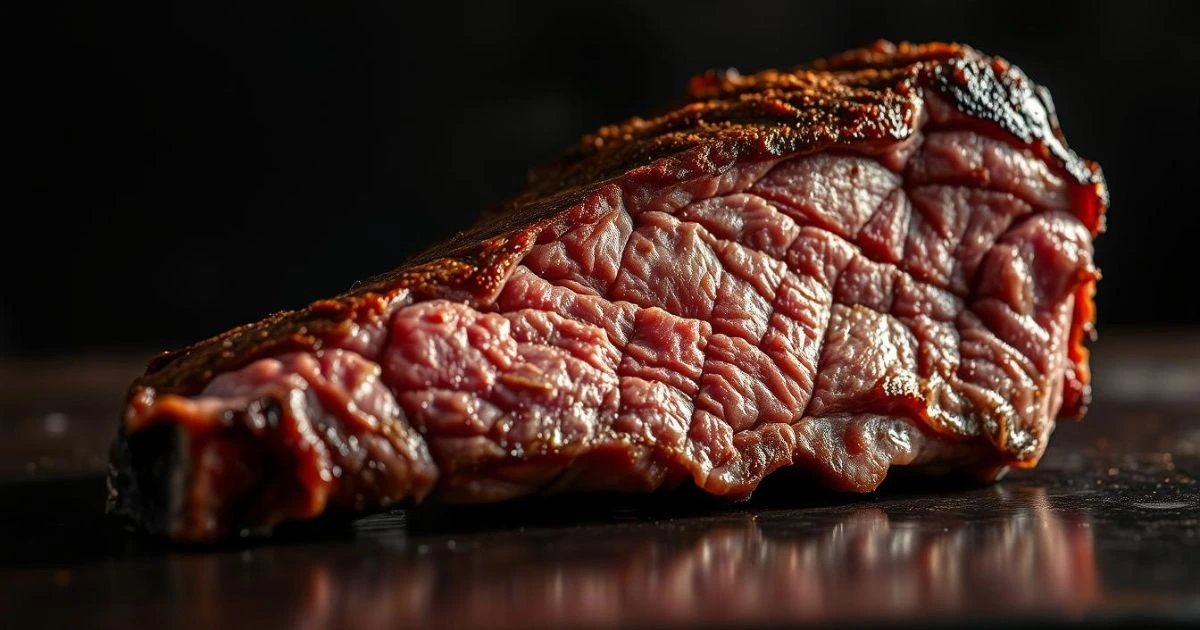
Watching my grandfather cook a ribeye bone steak was magical. The sizzle and rich smell filled our kitchen. It was a moment I’ve never forgotten.
Ribeye bone steak is the best of beef. The steaks are more than meat; they’re a chance to create a special meal. Their marbling makes them tender and flavorful, making any meal better.
Whether you’re a pro in the kitchen or love grilling, knowing how to pick and cook the best ribeye bone steak is key. This guide will help you understand everything about these amazing steak cuts, from choosing to serving.
Get ready for a tasty adventure with premium ribeye bone steak. It’s where skill and passion meet, and every bite tells a story of cooking art.
Table of Contents
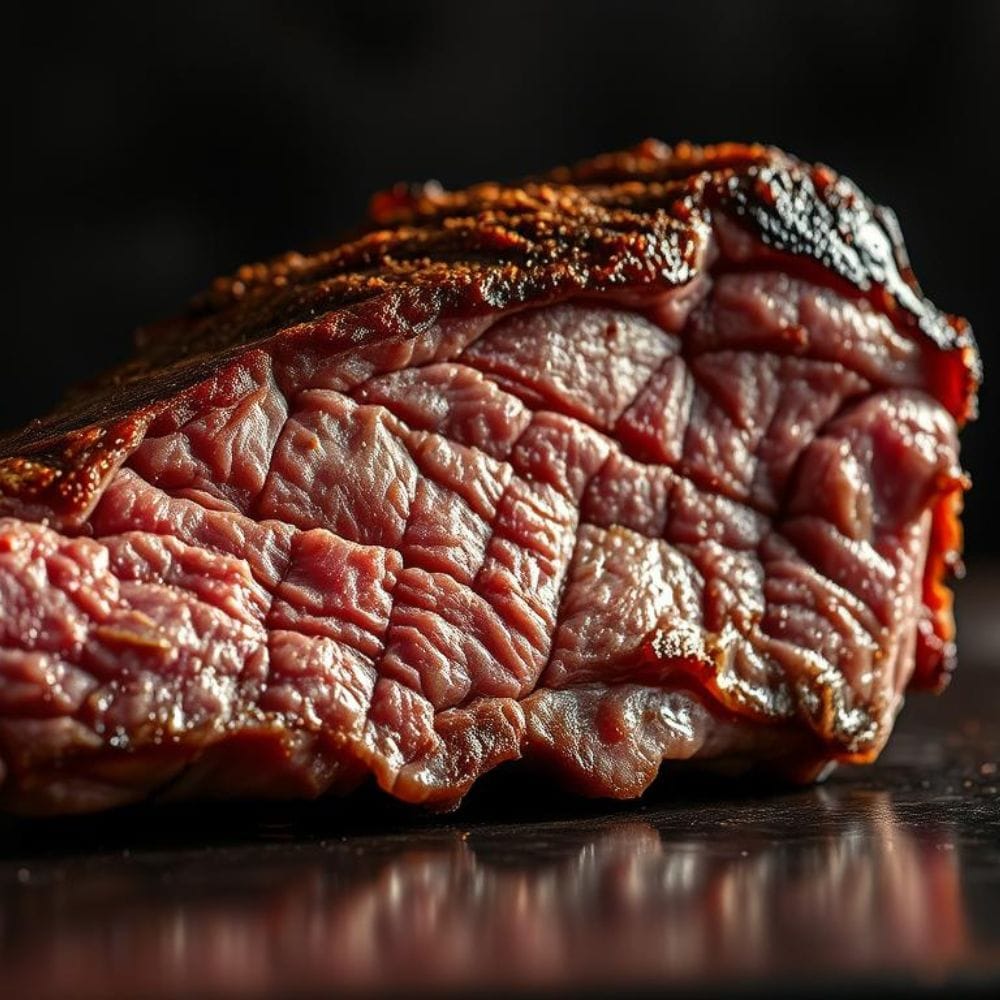
ribeye bone steak
Ingredients
Equipment
Method
- Dry Brine (Optional but Recommended):Generously salt both sides of the steak.Place uncovered in the refrigerator for 1–24 hours.
- Bring to Room Temperature:Remove the steak from the fridge 30–45 minutes before cooking.
- Season the Steak:Pat dry, then season with black pepper and optional garlic powder.
- Grilling Method:Preheat grill to 400–450°F and create a two-zone fire.Grill for 4–5 minutes per side for medium-rare.Flip using tongs (do not pierce the meat).Rest for 5–10 minutes before serving.
- Pan-Searing Method:Preheat a cast-iron skillet over medium-high heat until hot.Sear steak 4–5 minutes per side.Add butter and herbs, then baste for 1–2 minutes.Remove from heat and rest 5–10 minutes under foil.
- Serve:Slice against the grain.Garnish with herbs or compound butter.
Notes
- Thicker steaks (1.5–2 inches) hold moisture better and cook more evenly.
- Always rest the steak to allow juices to redistribute.
- Use a thermometer for precision. Remove steak 5°F before target temperature.
- Compound butters with rosemary, thyme, or garlic add extra richness.
- Avoid over-seasoning, let the steak’s natural flavor shine.
Understanding Premium Ribeye Bone Steak
Exploring the world of top-rated ribeye bone steak is a treat for steak lovers. Buying ribeye bone steak online means you’re picking a cut known for its rich flavor.
The ribeye bone steak is a premium choice with special qualities. It comes from the rib section of the cow. This steak offers a unique dining experience.
What Makes Ribeye Bone Steak Special
Ribeye steaks are known for their amazing qualities:
- Exceptional tenderness
- Rich, robust flavor profile
- Consistent meat quality
- Luxurious eating experience
Marbling and Fat Content Benefits
The marbling in ribeye steaks makes them melt-in-your-mouth tender. The fat content adds to the flavor and juiciness.
Bone-In vs Boneless Comparison
Bone-in ribeye steaks have advantages that chefs and home cooks love:
- Enhanced flavor development
- Better heat distribution during cooking
- Natural moisture retention
- More complex taste profile
“The bone is nature’s flavor conductor, transforming a good steak into an exceptional dining experience.”
Selecting the Perfect Cut for Your Table
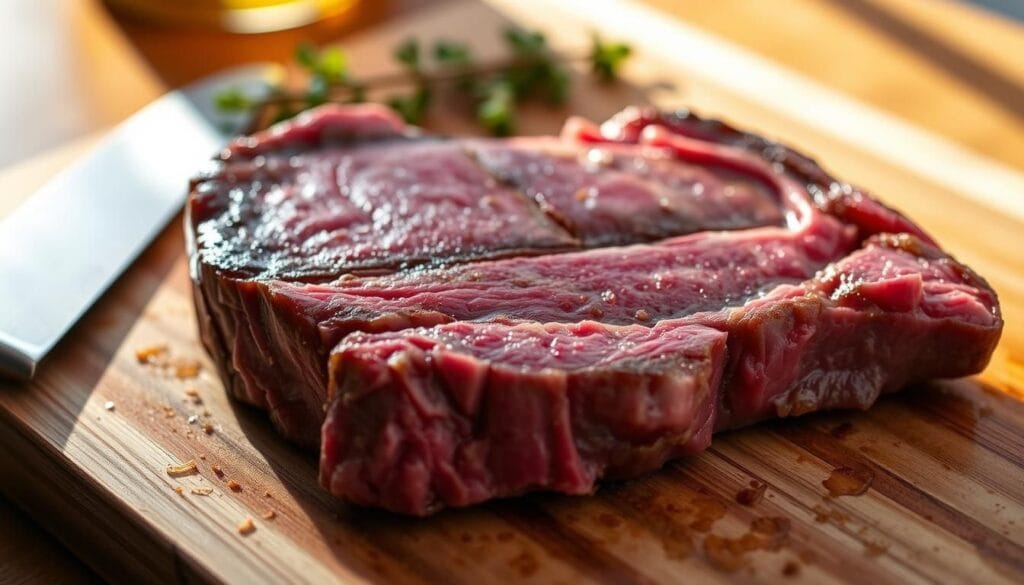
Choosing the right ribeye bone steak is important. The quality of your cut greatly affects your dining experience. Both professional chefs and home cooks agree that picking a top-notch bone in ribeye starts with knowing what to look for.
When you’re looking for a bone in ribeye, keep these key points in mind:
- Examine the marbling pattern carefully
- Look for consistent fat distribution
- Check the meat’s color and texture
- Verify the steak’s thickness
USDA grading is a great tool for picking high-quality steaks. Prime-grade ribeye is the highest quality, with lots of marbling for tender, flavorful meat. Choice-grade cuts are a good middle ground, offering quality without breaking the bank.
Thickness is crucial when cooking steak. Look for cuts between 1 to 1.5 inches thick. This thickness allows for perfect searing and keeps the meat juicy. Too thin, and it might get overcooked. Too thick, and it’s hard to cook evenly.
“The secret to an incredible steak begins with selecting the right cut.” – Professional Butcher
Here are some visual signs of a great ribeye:
- Bright red color without brown spots
- Smooth, fine-textured muscle fibers
- White or cream-colored fat edges
- Consistent marbling throughout the muscle
Whether you buy from a local butcher or a fancy grocery store, trust your gut. Don’t be afraid to ask for advice. A meat expert can help you find the perfect ribeye bone steak for your meal.
Essential Preparation Techniques
Preparing a juicy ribeye bone steak needs careful attention. The right steps can turn a simple cut into a top-notch meal. Learning to cook a ribeye steak starts long before it hits the heat.
Dry Brining Magic
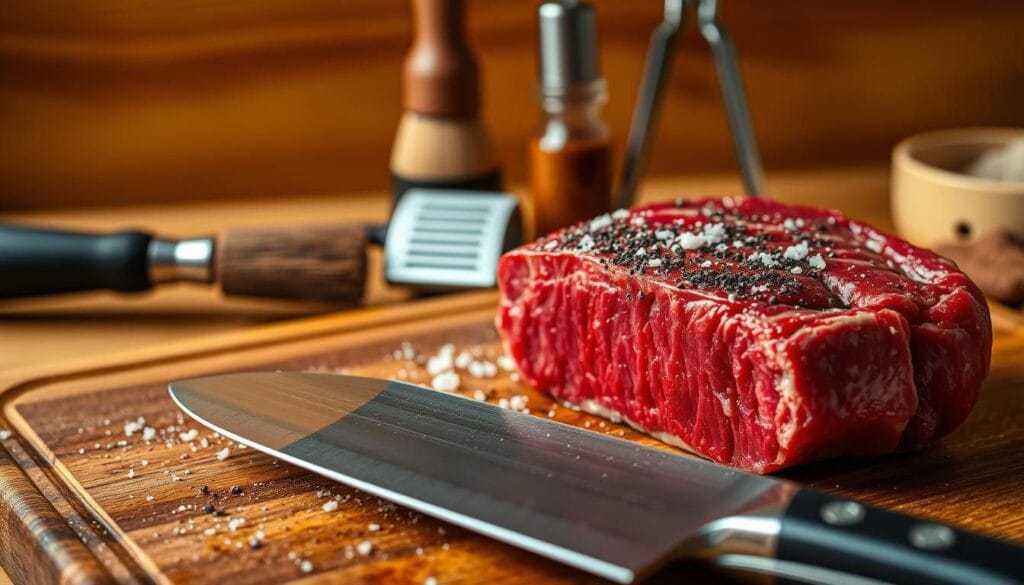
Dry brining is a key technique for cooking a ribeye steak. It ensures maximum flavor and tenderness. Here’s how it works:
- Generously salting the entire surface of the steak
- Placing the steak uncovered in the refrigerator
- Letting it rest for 1-24 hours before cooking
The salt pulls out moisture, which then dissolves the salt crystals. This process makes the meat absorb the seasoned liquid. It results in a deeply flavored and juicy ribeye bone steak.
Temperature Matters
Bringing your steak to room temperature is key for even cooking. Cold meat straight from the fridge can lead to uneven heat. Take the steak out of the fridge 30-45 minutes before cooking for a perfectly cooked piece.
Seasoning Strategy
Seasoning a ribeye should boost, not hide, its natural flavors. A simple mix of:
- Kosher salt
- Freshly ground black pepper
- Optional garlic powder
This approach lets the meat’s rich flavor stand out. It also creates a tasty crust during cooking.
Mastering the Grill Method
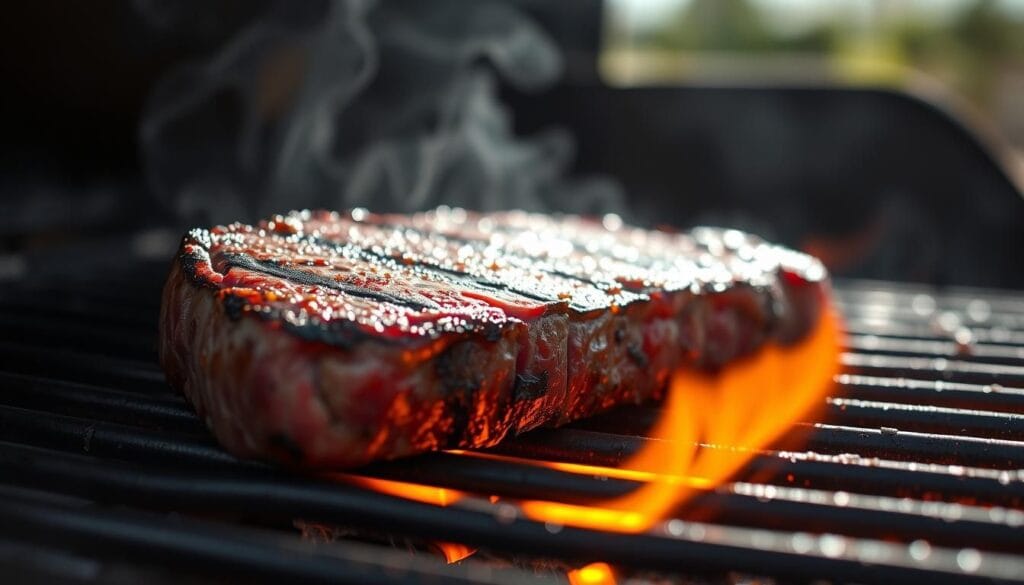
Cooking a juicy ribeye bone steak on the grill needs precision and skill. The first step is understanding your heat source and how to prepare. Whether you use a gas or charcoal grill, getting the right temperature is key for a delicious steak.
Before cooking, there are a few important steps:
- Preheat your grill to 400-450°F
- Create a two-zone fire for better heat control
- Pat the steak dry before seasoning
- Allow meat to reach room temperature before grilling
For those with gas grills, preheating is easy. Just light all burners and close the lid. This lets the grates get hot enough. Charcoal grill users should wait until coals are light gray with an orange glow. This ensures even heat.
“The secret to how to cook a ribeye steak is mastering temperature control and timing.” – Professional Grillmaster
Here are some key tips for grilling your ribeye bone steak:
- Place steak on hot grates at a 45-degree angle
- Grill for 4-5 minutes per side for medium-rare
- Use tongs to flip, avoiding piercing the meat
- Watch for beautiful crosshatch grill marks
Handling flare-ups is crucial when cooking a juicy ribeye bone steak. Move the steak to the cooler side of the grill if flames get too intense. This prevents charring and ensures an even cook.
Pan-Searing Techniques for Restaurant-Quality Results
Cooking a ribeye steak to perfection needs precision and the right technique. Professional chefs say pan-searing is an art that turns a tasty ribeye into a culinary masterpiece.
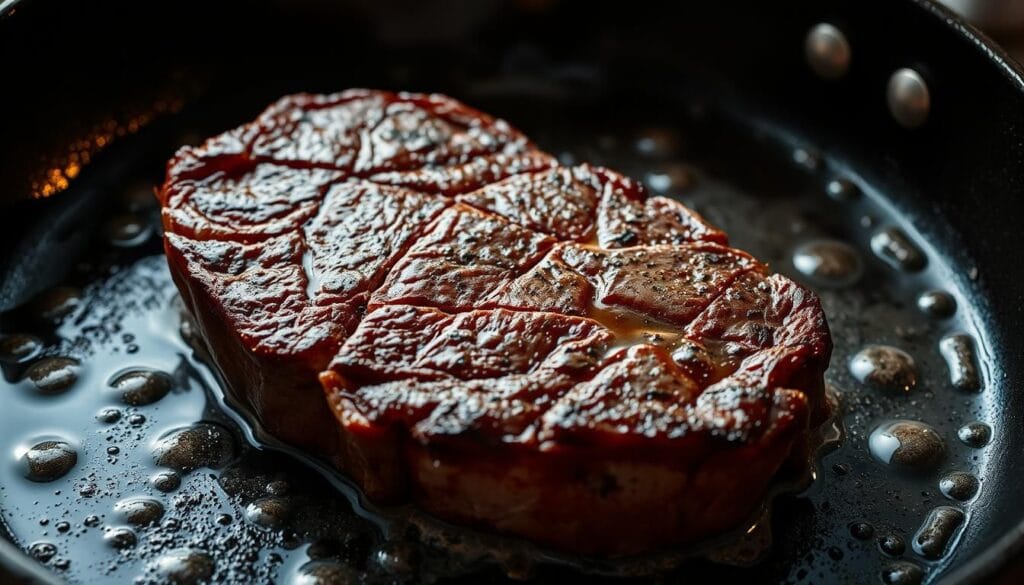
The secret to top results is using the right cooking tools and mastering certain techniques. Cast iron skillets are the best for getting a great sear.
Cast Iron Skillet Advantages
- Exceptional heat retention
- Even heat distribution
- Creates perfect caramelized crust
- Versatile cooking surface
Butter Basting Technique
Butter basting boosts the flavor of your ribeye. It involves spooning melted butter over the steak. This makes the outside golden and rich.
Temperature Control Strategies
| Cooking Stage | Temperature Range | Recommended Action |
| Preheating Skillet | Medium-High Heat | Ensure skillet is hot before adding steak |
| Initial Sear | 400-450°F | Create crispy exterior |
| Butter Basting | 350-375°F | Reduce heat, add butter |
By learning these pan-searing techniques, home cooks can make their ribeye steak taste like it’s from a restaurant. It turns a simple meal into a special dining experience.
Professional Cooking Temperature Guide
Cooking ribeye bone steak to perfection needs precise temperature control. Knowing the internal meat temperature is key to getting the right doneness and taste. This is especially true when cooking ribeye bone steak.
A meat thermometer is your best friend for making the best ribeye bone steak. Professional chefs agree that accurate temperature is what makes a steak go from good to great.
| Doneness Level | Internal Temperature | Texture Description |
| Rare | 120-130°F | Cool red center, very soft |
| Medium Rare | 130-140°F | Warm red center, tender |
| Medium | 140-150°F | Pink center, firmer texture |
| Medium Well | 150-160°F | Slight pink center, less juicy |
| Well Done | 160°F+ | No pink, firm throughout |
Here are some important tips for cooking a ribeye steak:
- Always remove steak from heat 5 degrees before desired temperature
- Let meat rest 5-10 minutes after cooking
- Insert thermometer into thickest part of the steak
“Temperature is the secret to a perfectly cooked steak” – Professional Chef Recommendation
Pro tip: Thicker steaks require slightly adjusted cooking times to reach ideal internal temperatures.
Complementary Seasonings and Marinades
To make a premium ribeye bone steak truly special, you need the right seasonings and marinades. The perfect mix can turn a delicious steak into a feast for the senses.
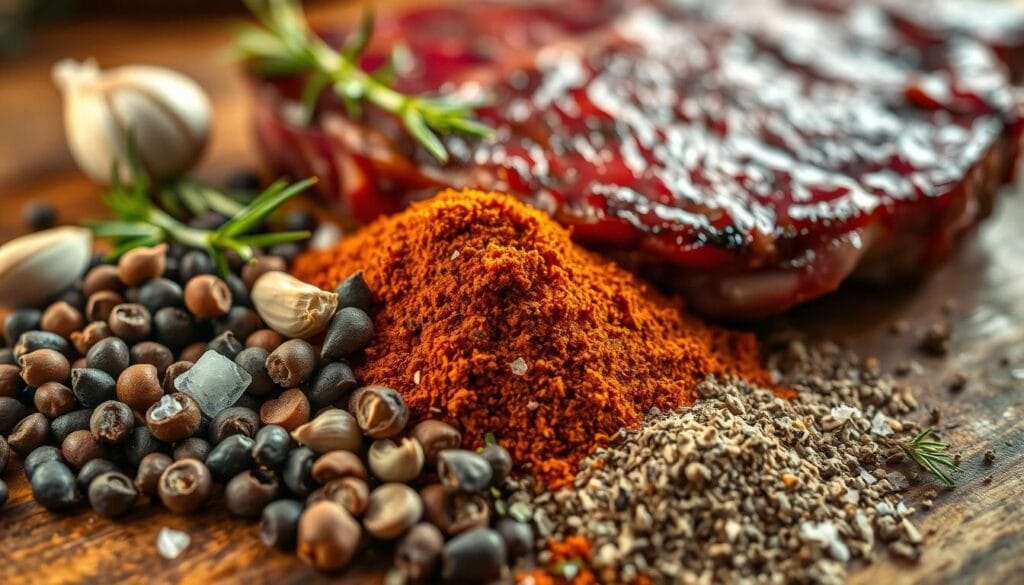
Seasoning is an art that can really boost your steak’s flavor. Chefs know that choosing the right herbs and spices is key to a great meal.
Stone House Seasoning: A Classic Flavor Enhancer
The Stone House Seasoning is a timeless choice for ribeye bone steak. It highlights the meat’s rich taste without overwhelming it.
- Ingredients for Stone House Seasoning:
- 2 tablespoons kosher salt
- 1 tablespoon black pepper
- 1 tablespoon garlic powder
Herb and Butter Combinations
Understanding how herbs and butter can improve your steak is crucial. Here are some classic pairings:
| Herb Combination | Butter Type | Flavor Profile |
| Rosemary and Thyme | Clarified Butter | Earthy and Rich |
| Parsley and Chives | Compound Butter | Fresh and Bright |
| Sage and Garlic | Cultured Butter | Robust and Intense |
When seasoning your steak, remember to use a light hand. High-quality seasonings should enhance, not overpower, the meat’s natural taste.
Resting and Serving Recommendations
The last steps in making a top-rated ribeye bone steak are key for a great meal. Letting your bone in ribeye rest after cooking helps the juices spread evenly. This makes your steak juicy and full of flavor.
Professional chefs suggest these resting tips:
- Let steaks rest for 5-10 minutes after cooking
- Cover the steak loosely with aluminum foil
- Place on a warm cutting board away from direct heat
The resting time depends on the steak’s thickness. Thicker steaks need longer resting times to stay juicy. A one-inch thick ribeye should rest for 5-7 minutes. Thicker cuts might need up to 10 minutes.
Serving your bone in ribeye needs careful steps:
- Use a sharp carving knife
- Cut against the grain for maximum tenderness
- Slice into thin, elegant portions
“The key to a perfect steak is patience during both cooking and resting.” – Professional Chef
For a fancy look, add fresh herbs like rosemary or thyme. Serve your juicy ribeye with sides like roasted veggies or a crisp salad. This completes the meal.
Conclusion
Cooking the best ribeye bone steak is an art. It requires careful selection, precise preparation, and expert techniques. You now know how to turn a premium ribeye into a masterpiece in your kitchen.
The journey starts with choosing high-quality meat. Each step is crucial, from dry brining to seasoning. Professional chefs know these details make a big difference.
With practice, home cooks can improve their steak skills. Whether grilling or pan-searing, the techniques in this guide will help. You’ll get better at making delicious steaks that impress everyone.
Start cooking premium ribeye bone steak and make your kitchen a gourmet spot. Each steak is a chance to enjoy great flavor and texture.
FAQ
What makes a ribeye bone steak different from other cuts?
A ribeye bone steak stands out because of its rich marbling and flavor. The bone adds depth to the taste. It also keeps the meat moist and juicy.
This makes it a favorite among steak lovers. The marbling ensures the steak is tender and juicy.
How do I choose the best ribeye bone steak when shopping?
Look for steaks with fine marbling. Choose USDA Prime or Choice grades for quality. The best thickness is 1.5 to 2 inches.Check the fat distribution and color. It should be bright red with white marbling. Ask about the steak’s origin and grading when buying online or at a butcher.
What’s the best way to prepare a ribeye bone steak before cooking?
Dry brining is the best method. Remove the steak from packaging and pat it dry. Season with kosher salt about 1 hour before cooking.This helps develop a flavorful crust. Use simple seasonings like coarse salt and black pepper for the best flavor.
What are the recommended cooking methods for ribeye bone steak?
Grilling and pan-searing are top choices. Grilling gives a smoky flavor. Use a two-zone fire for better control.Pan-searing in a cast-iron skillet creates a perfect crust. Both methods are great, depending on your preference.
How do I know when my ribeye bone steak is cooked to the right temperature?
Always use a meat thermometer. For medium-rare, aim for 130-135°F. Remove the steak 5 degrees before your desired doneness.Let it rest for 5-10 minutes. This ensures the steak stays juicy and flavorful.
Can I buy a high-quality ribeye bone steak online?
Yes, many online meat suppliers offer premium steaks. Look for detailed information about the beef’s origin and grading. Trusted butchers ship in vacuum-sealed packaging.Check customer reviews and the supplier’s reputation before buying.
What are the best seasonings for a ribeye bone steak?
A simple mix of kosher salt and black pepper is best. For more flavor, try Stone House Seasoning or a custom blend. Avoid over-seasoning to keep the steak’s natural taste.Compound butters with herbs can also enhance the flavor.
How should I store my ribeye bone steak before cooking?
Store the steak in the coldest part of your fridge. If not cooking right away, use the original packaging or a sealed container. Cook within 3-5 days for best quality.If freezing, wrap tightly in freezer paper or vacuum-seal. Use within 4-6 months for the best results.
There are no reviews yet. Be the first one to write one.
1 thought on “Perfect Ribeye Bone Steak: Grilled or Pan-Seared”
Comments are closed.